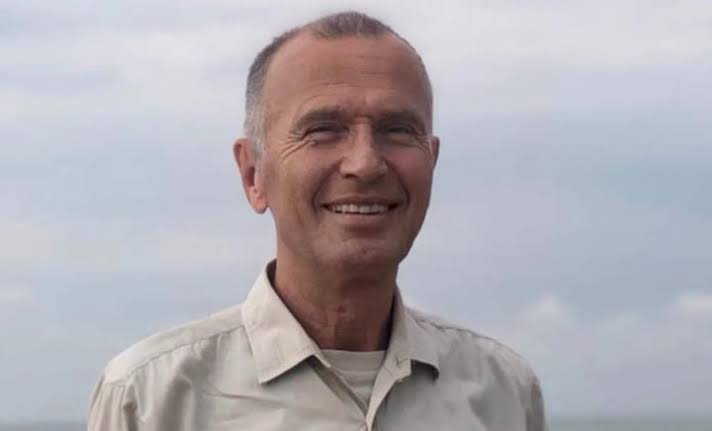
Vladimir Uglev, a chemist who worked on some of the earliest Novichok nerve agents and later spoke publicly about them, died on Oct. 26, 2026, at 80, according to The Insider and Meduza. He had lived in recent years in Anapa, a Russian Black Sea resort city, The Insider reported. No cause of death has been reported.
The announcement
Uglev's death became public about a week after it happened. Meduza reported it on Nov. 3, 2026, citing The Insider. Neither report says why the news took a week to emerge.
The Insider does not say where he died. No outlet has reported a cause of death, and LBC described the circumstances as unexplained. No evidence of foul play has been reported.
No statement from family, no funeral arrangements and no official Russian reaction have been reported. Christo Grozev, The Insider's lead investigator, commented on the death on X.
Who he was
Uglev was born on Sept. 20, 1946, in Kirovsk, Russia, according to The Insider. He trained as a chemist in Moscow and spent the next 15 years inside the state system that developed chemical warfare agents.
- 1946: Born Sept. 20 in Kirovsk, Russia, according to The Insider
- 1975: Graduated from the Dmitry Mendeleev Moscow Institute of Chemical Technology, in the chemistry and technology of biologically active substances
- 1975 to 1990: Senior researcher at the Volsk branch of the State Research Institute of Organic Chemistry and Technology, known as GosNIIOKhT, a state institute that developed chemical warfare agents including Novichok
- Until about 1990: Worked on some of the earliest Novichok agents at the Defence Ministry's 33rd Central Scientific Research and Testing Institute in Shikhany-2, Saratov Region, The Insider reported
The Insider describes Novichok as a family of highly toxic organophosphorus nerve agents, banned under the Chemical Weapons Convention. Meduza describes Uglev as one of its developers. The reports do not detail his specific role in the work.
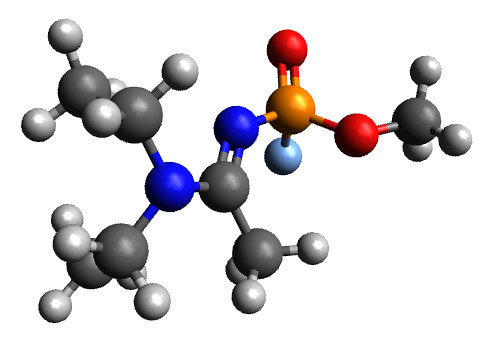
Uglev was not named in the UK sanctions announced earlier in 2026 against scientists and institutions linked to Novichok, LBC reported.
Speaking out
In 2018, after the Skripal poisoning in Salisbury, Uglev gave a series of interviews that contradicted official Russian denials, according to Meduza and The Insider.
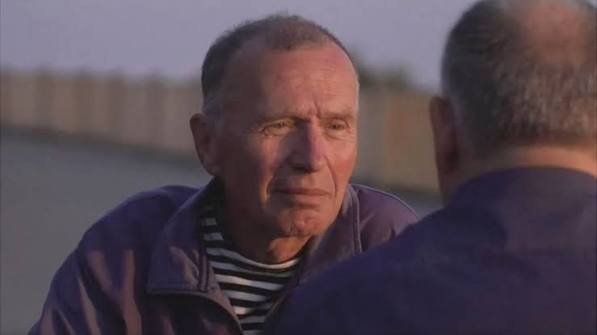
LBC reports he accused the Kremlin of a "state-level hit" using Novichok and said he had "no doubt" the agent was A-234. He also said, according to LBC, that the sample's high purity suggested it could have been a batch he made himself.
In 2020, after Alexei Navalny's poisoning, he spoke extensively to the media about Novichok's properties, The Insider and LBC reported. That year he gave an interview to Xavier Colas, a journalist with El Mundo. Colas reports he said: "I did not invent Novichok to see it in the hands of assassins." Colas also reports he said the Navalny dose could have come from batches he had made decades earlier.
As the two parted, Colas writes, Uglev told him: "I am afraid of the indifferent, because thanks to their pact of silence there is betrayal and murder in our world."
Uglev later advised independent journalists, including The Insider, in investigations into the Russian security services' use of Novichok, according to Meduza and The Insider. What he contributed to those investigations is not detailed in the reports.
The Insider's Grozev wrote that Uglev "openly contradicted the Kremlin denials" in the Skripal and Navalny cases and was "an outspoken critic of its use to target civilians."
The last headline
Vladimir Uglev died on Oct. 26, 2026, at 80. He was born in Kirovsk in 1946, worked on Novichok until about 1990, and from 2018 spoke publicly about it. The cause of his death has not been reported.