
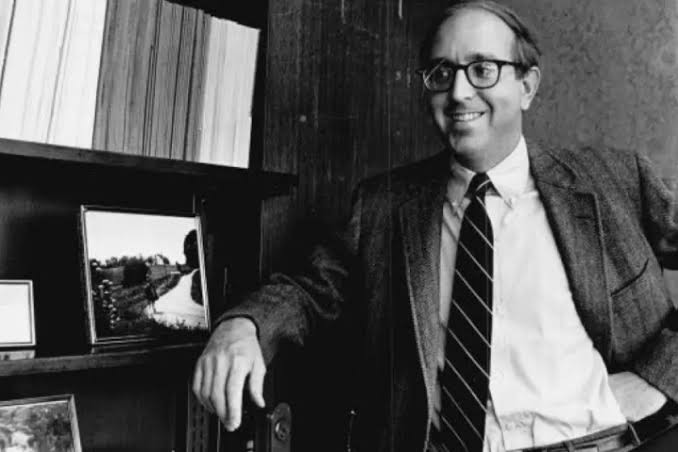
Richard A. Posner, the federal appeals judge and University of Chicago law professor, died on Tuesday, Nov. 10, 2026, in Chicago. He was 87. The University of Chicago Law School announced his death on Wednesday, and his son Eric, who teaches at the law school, confirmed it to The New York Times. No cause of death has been reported.
Posner is usually introduced by his numbers: about 3,300 opinions, more than 50 books, and the title of most-cited legal scholar of the second half of the 20th century. This story is about something else he did, and it is far rarer in a federal judge. He changed his mind in print, where everyone could read it. Then he left the bench on a single day’s public notice, and the reason for the quiet years that followed did not surface until 2022.
From Yale at 16 to the Seventh Circuit
- Born in New York in 1939; entered Yale at 16 and graduated in 1959
- Harvard Law School, class of 1962, first in his class and president of the Harvard Law Review
- Law clerk to Justice William J. Brennan Jr., 1962–63
- Assistant to the solicitor general, Thurgood Marshall, 1965–67
- Joined the University of Chicago Law School faculty in 1969; wrote Economic Analysis of Law in 1973
- Appointed to the U.S. Court of Appeals for the Seventh Circuit by President Ronald Reagan in 1981
- Chief judge of the Seventh Circuit, 1993–2000
He was known as a conservative when Reagan appointed him. By 2017, The New York Times wrote, his recent opinions on voter ID laws, abortion, same-sex marriage and workplace discrimination based on sexual orientation had been “decidedly liberal.”
The judge who said he was wrong
The clearest example is voter ID. In Crawford v. Marion County Election Board, decided Jan. 4, 2007, Posner wrote the Seventh Circuit opinion upholding Indiana’s photo-identification law for voters. Almost no one had been prosecuted for impersonating a voter, he wrote, but that absence was explained by the underenforcement of minor criminal laws and by “the extreme difficulty of apprehending a voter impersonator.” The Supreme Court affirmed in 2008, and the case became one of the landmark rulings in favor of such laws.
In October 2013, The New York Times reported on a passage in his new book, Reflections on Judging. “I plead guilty to having written the majority opinion,” Posner wrote, calling the Indiana law “a type of law now widely regarded as a means of voter suppression rather than of fraud prevention.” The Times opened its story with the thought it said rarely passes the lips of a federal judge: “I was wrong.”
He kept going. A later profile by Emily Bazelon in The New York Times, quoted by the Election Law Blog, said Posner explained that judges sometimes do not understand a subject well enough to “gauge the consequences of their decisions,” and that when Wisconsin’s voter ID law reached the Seventh Circuit he urged the full court to rehear the case. He wrote that the “net effect of such requirements is to impede voting by people easily discouraged from voting, most of whom probably lean Democratic.” He lost that argument, and the Wisconsin law stood.
The change did not run in a straight line. Three more rulings show how it looked from the bench:
- Same-sex marriage, Sept. 4, 2014. In Baskin v. Bogan, Posner wrote for a three-judge panel (with Judges Williams and Hamilton) that affirmed lower-court rulings striking down Indiana’s and Wisconsin’s bans. “Tradition per se therefore cannot be a lawful ground for discrimination,” he wrote. Indiana let first cousins marry once they were past childbearing age, so he said the state had “invented an insidious form of discrimination: favoring first cousins, provided they are not of the same sex, over homosexuals.”
- Abortion, Dec. 20, 2013. In Planned Parenthood of Wisconsin v. Van Hollen, Posner wrote the opinion affirming a preliminary injunction against a new Wisconsin law that would have barred doctors from performing abortions unless they had admitting privileges at a hospital within 30 miles of the clinic. Judge Manion concurred in part and in the judgment.
- Recording police, May 8, 2012. In ACLU v. Alvarez, a panel majority, in an opinion by Judge Sykes, sided with the ACLU against Illinois’s eavesdropping law, which made it a felony to audio record a conversation without every party’s consent, as applied to openly recording police on duty in public. Posner dissented, writing that he would have affirmed the district court.
A retirement on one day’s notice
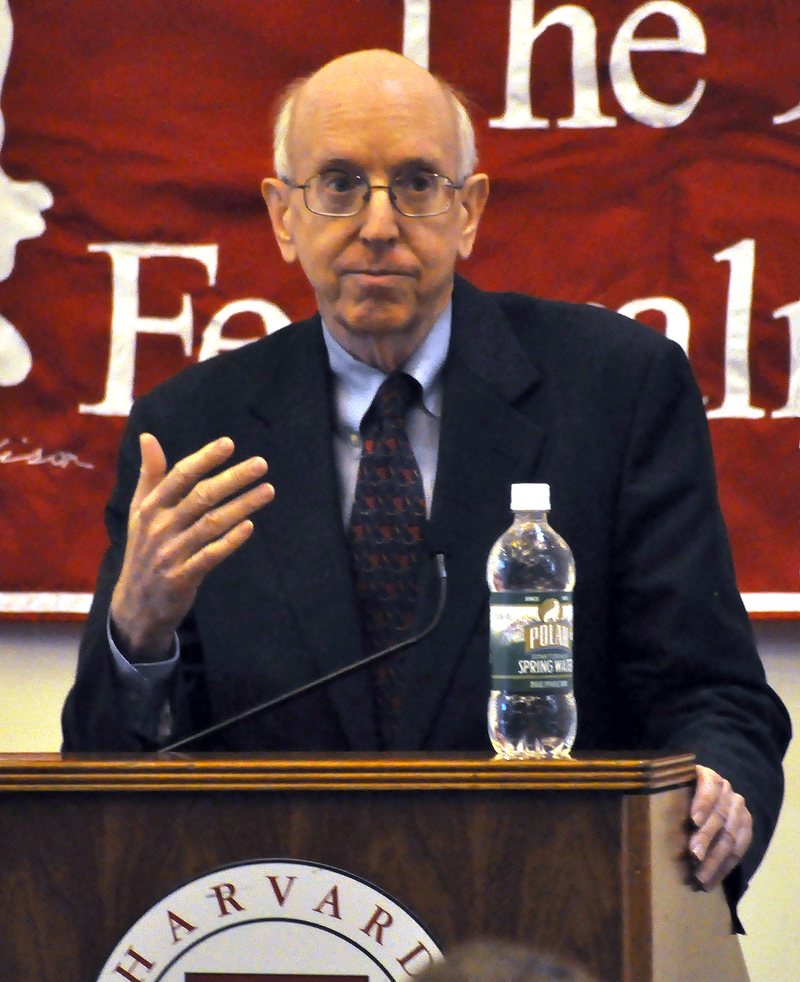
On Friday, Sept. 1, 2017, the Seventh Circuit announced that Posner, then 78, was stepping down effective the next day. He said in a statement he was “proud to have promoted a pragmatic approach to judging.” Reuters later described the legal world as stunned by an exit with a single day’s public notice.
He gave several reasons. He told The New York Times that about six months earlier, “I awoke from a slumber of 35 years,” realizing that people without lawyers are mistreated by the legal system. “I realized, in the course of that, that I had really lost interest in the cases,” he said, and asked himself “what kind of person wants to have the same identical job for 35 years?” He told the Chicago Daily Law Bulletin, as Reuters reported: “I was not getting along with the other judges because I was (and am) very concerned about how the court treats pro se litigants, who I believe deserve a better shake.” The Chicago Tribune reported that he also told the Times that “most judges regard these people as kind of trash not worth the time of a federal judge.”
He founded the Posner Center of Justice for Pro Se’s in early 2018 to help people representing themselves in court. It closed in July 2019, Reuters reported.
The long silence
What the public did not know in 2017 came out in March 2022. Reuters reported that Posner had received a “confirmed diagnosis of Alzheimer’s disease” about six months after retiring, according to a Feb. 22, 2022, letter from his attorney. The letter came up in a dispute with the pro se center’s former co-director over unpaid wages, and it said Posner “has long since been moved to a nursing facility.” The Tribune repeated the account in its obituary. That diagnosis is background, not a reported cause of death. No cause has been given.
Quick facts
- Name: Richard Allen Posner
- Born: Jan. 11, 1939, New York
- Died: Nov. 10, 2026, in Chicago, at 87; no cause reported
- Federal judge: U.S. Court of Appeals for the Seventh Circuit, 1981 to Sept. 2, 2017
- Education: Yale College (1959), Harvard Law School (1962)
- Death announced by: the University of Chicago Law School
- Survivors: his wife, Charlene, of 64 years; two sons; four grandchildren, per the Associated Press and the Chicago Sun-Times; services pending
The last headline
Adam Chilton, dean of the law school, said: “There has never been a legal scholar quite as prolific, influential, and endlessly curious as Dick Posner.” Saul Levmore, a former dean, told The New York Times that Posner “was the greatest and most skilled judge in American history.”
Not everyone in his courtroom felt that way. The Tribune wrote that he drew a fervent following in legal circles and “a fair amount of critics who found him overbearing.” Joel Bertocchi, a Chicago lawyer who worked as a staff attorney for the Seventh Circuit in the 1980s, said Posner could be mocking and dismissive on the bench, but that he did not think Posner was mean. “He was not in the approval business,” Bertocchi said. In a 2001 New Yorker profile, Posner described himself as having the personality of his cat, Dinah: “Playful, but with a streak of cruelty.”
Here is Martha Nussbaum, a University of Chicago professor of law and ethics, talking about her friendship with Posner, in a video the University of Chicago Law School posted in June 2026.
Sources
- University of Chicago Law School, “Law School Mourns the Passing of Richard A. Posner” (Nov. 11, 2026)
- The New York Times, “Judge Richard A. Posner Has Died. His Influence in Law Was Beyond Compare.” (Nov. 11, 2026)
- Chicago Tribune, “Richard Posner, eminent federal appellate judge and pioneering scholar, dies at 87” (Nov. 11, 2026)
- Chicago Sun-Times, “Richard Posner, longtime federal judge and ‘prolific’ University of Chicago legal scholar, dies at 87” (Nov. 11, 2026)
- ABC7 Chicago, “Richard Posner, former federal appellate judge in Chicago, dies at 87” (Nov. 12, 2026)
- Newser, “‘Most Skilled Judge’ in US History Dies at 87,” with Associated Press reporting (Nov. 12, 2026)
- Election Law Blog, Rick Hasen, quoting The New York Times (Nov. 11, 2026)
- The New York Times, “Judge in Landmark Case Disavows Support for Voter ID” (Oct. 15, 2013)
- The New York Times, “An Exit Interview With Richard Posner, Judicial Provocateur” (Sept. 11, 2017)
- Chicago Tribune, Posner retires from the Seventh Circuit (Sept. 1, 2017)
- Reuters, “After Posner retired from 7th Circuit, a grim diagnosis and a brewing battle” (Mar. 29, 2022)
- Crawford v. Marion County Election Board, 472 F.3d 949 (7th Cir. 2007)
- Baskin v. Bogan, 766 F.3d 648 (7th Cir. 2014)
- Planned Parenthood of Wisconsin, Inc. v. Van Hollen, 738 F.3d 786 (7th Cir. 2013)
- ACLU v. Alvarez, 679 F.3d 583 (7th Cir. 2012)
- Federal Judicial Center, biography of Richard Allen Posner
- University of Chicago Law School, faculty profile of Richard A. Posner