
Patrick Stewart spent six decades being the man audiences trusted to stay calm when nobody else could. He was Captain Jean-Luc Picard, running the bridge of the Enterprise with a quiet word instead of a raised voice, for seven seasons of “Star Trek: The Next Generation” and the films that followed. He was Professor Charles Xavier, the serene conscience of the X-Men, across 17 years of movies. Two franchises, two universes, one screen persona built almost entirely on control. He said that control was not a gift. It was something he built, deliberately, as a boy in a Yorkshire mill town, inside a house where his father beat his mother.
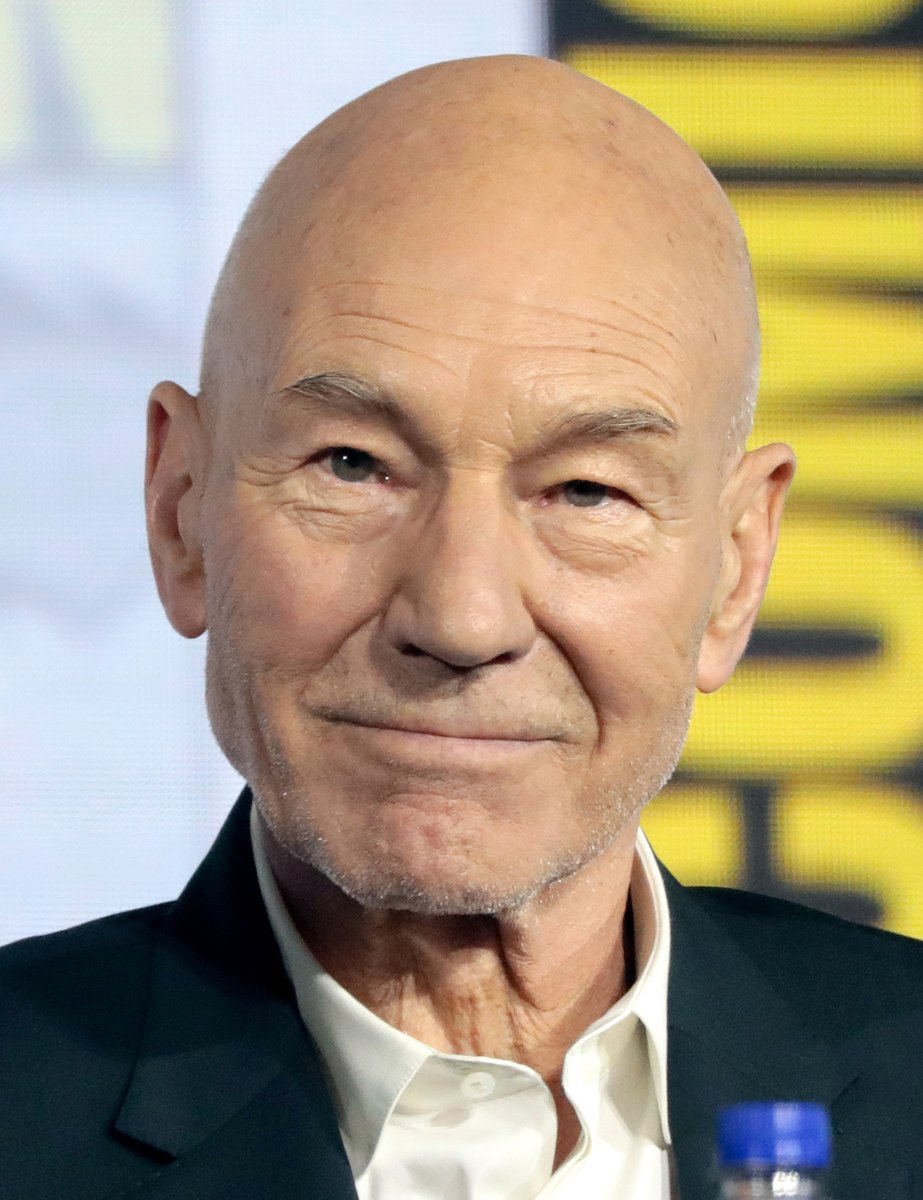
Stewart at the 2019 San Diego Comic-Con International, during the press rounds for “Star Trek: Picard.” Photo: Gage Skidmore, CC BY-SA 3.0.
Stewart was born in Mirfield, in the West Riding of Yorkshire, to a working-class family, according to Wikipedia. His mother, Gladys, worked in a textile mill. His father, Alfred, had served in the Parachute Regiment during the Second World War and came home to work as a laborer in Mirfield — and to be physically violent toward Gladys throughout Stewart’s childhood. The boy who watched it learned to read a room, to stay still, to keep his voice level. Decades later, that was exactly what a starship captain was supposed to look like.
He did not keep any of it private once he had a platform. In 2006 he made a short video for Amnesty International recounting his father’s violence and what it did to him. He became patron of Refuge, the UK charity for abused women. As Chancellor of the University of Huddersfield, a few miles from Mirfield, he funded a scholarship for post-graduate study into domestic violence, per Wikipedia. The actor whose whole brand was composure spent much of his adult life talking, in public and on the record, about the thing that had taught it to him.
The career that made the composure famous started on stage. Stewart joined the Royal Shakespeare Company in 1966 and stayed 16 years, per Wikipedia; he made his Broadway debut in 1971. Long after Hollywood, he kept going back to the theatre — his West End run in “Waiting for Godot” opposite Ian McKellen drew some of the best notices of his life, two knights of the realm playing a pair of tramps waiting for someone who never shows up.
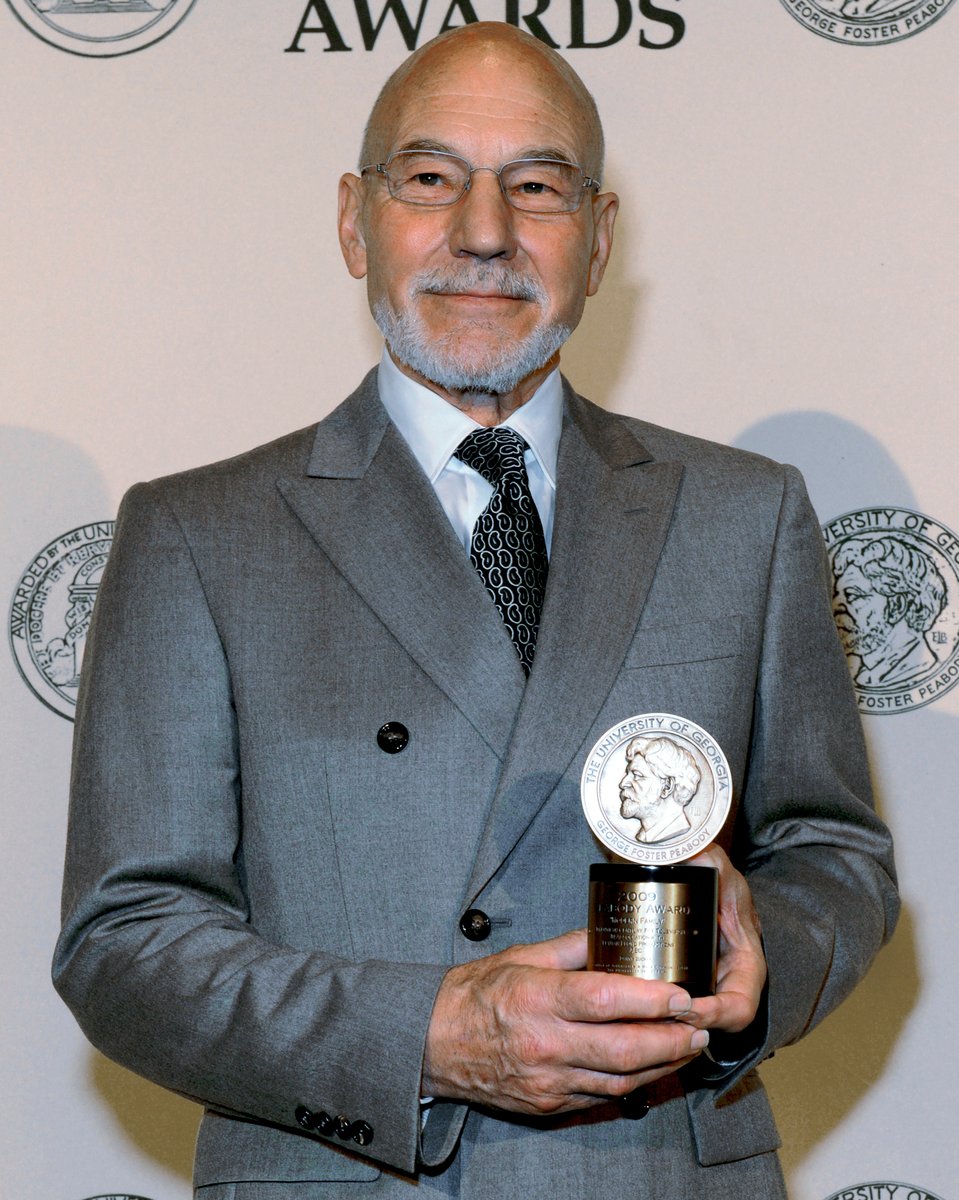
Then came the role nobody expected to work. A bald, classically trained English Shakespearean in his late forties, cast as the captain of an American pop-culture institution. “Star Trek: The Next Generation” ran from 1987 to 1994, and Picard became the character Stewart could never fully put down; he returned to him for “Star Trek: Picard” in 2020, more than three decades after first sitting in the chair. In between, starting in 2000, he took on Professor X in the “X-Men” films — a man in a wheelchair holding a school full of dangerous, frightened young people together by sheer moral authority. His last turn in the role was “Logan” (2017), which let Xavier be old, failing, and finally, movingly, out of control. It is hard not to notice which part he chose to end on.
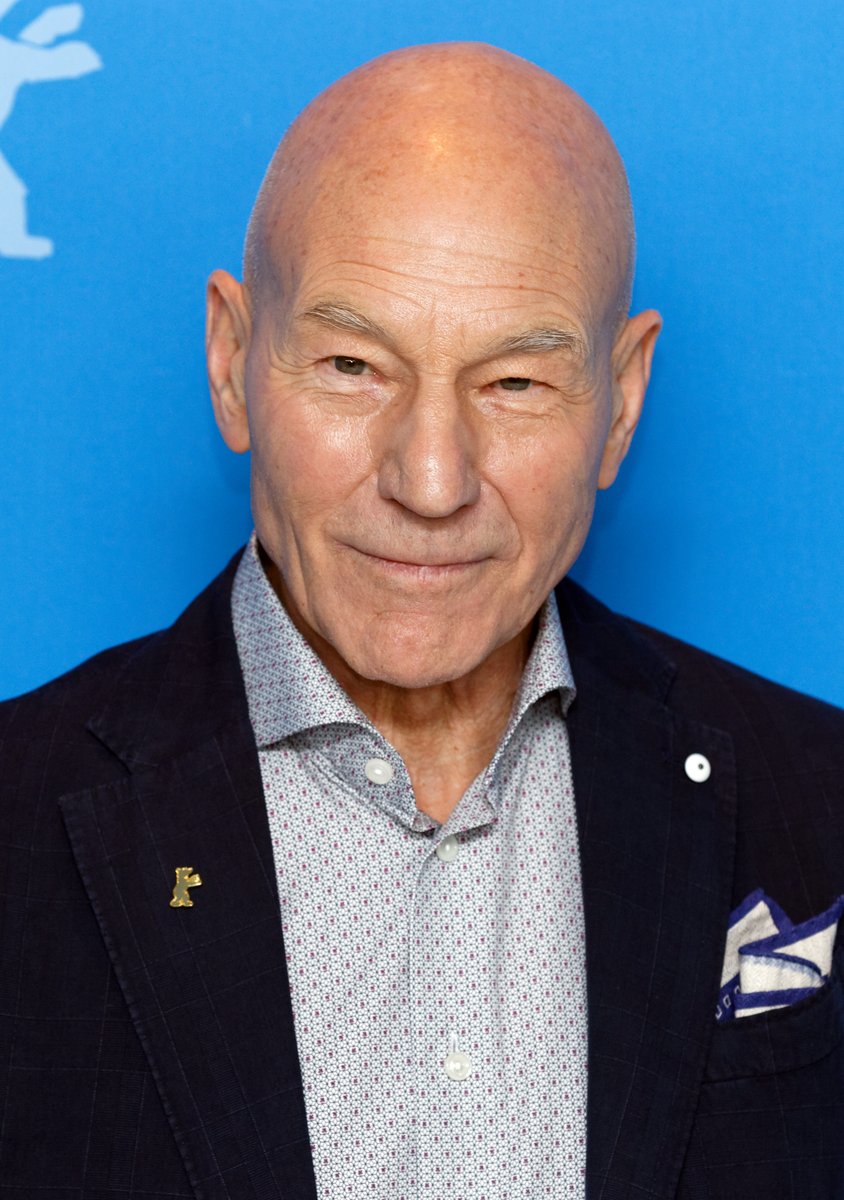
Queen Elizabeth II knighted him in 2010 for services to drama. He was, by then, also one of the most visible straight allies the LGBTQ+ community had in entertainment — a reputation he carried as plainly as everything else.
Stewart died October 28, 2026, at his home in Los Angeles. He was 86. The announcement came the next day from spokesperson Kelly Bush Novak, whose statement said he passed “in the loving care of his beloved wife Sunny, following a brief and poignant journey with Alzheimer’s Disease and Lewy Body Dementia,” according to PinkNews. His family said he was surrounded by “live music, prayer, tears, laughter.” He is survived by his wife, Sunny Ozell.
For six decades, two universes trusted Patrick Stewart to be the steadiest man in the room. He never let anyone forget where he learned how.