
Marvin Shanken never made wine and never rolled a cigar. What he did was decide, for several decades, which ones were worth your money — and he did it from a publishing company he started with a $5,000 loan from his sister. The newsletter he bought with that money had about 200 subscribers. The wine magazine he rescued seven years later was about to be folded by its founder. The cigar magazine he launched in 1992 was, he said, a bad idea in the eyes of every one of his senior executives. Taken together they made him, as one industry friend put it, one-third of the holy trinity of American wine.
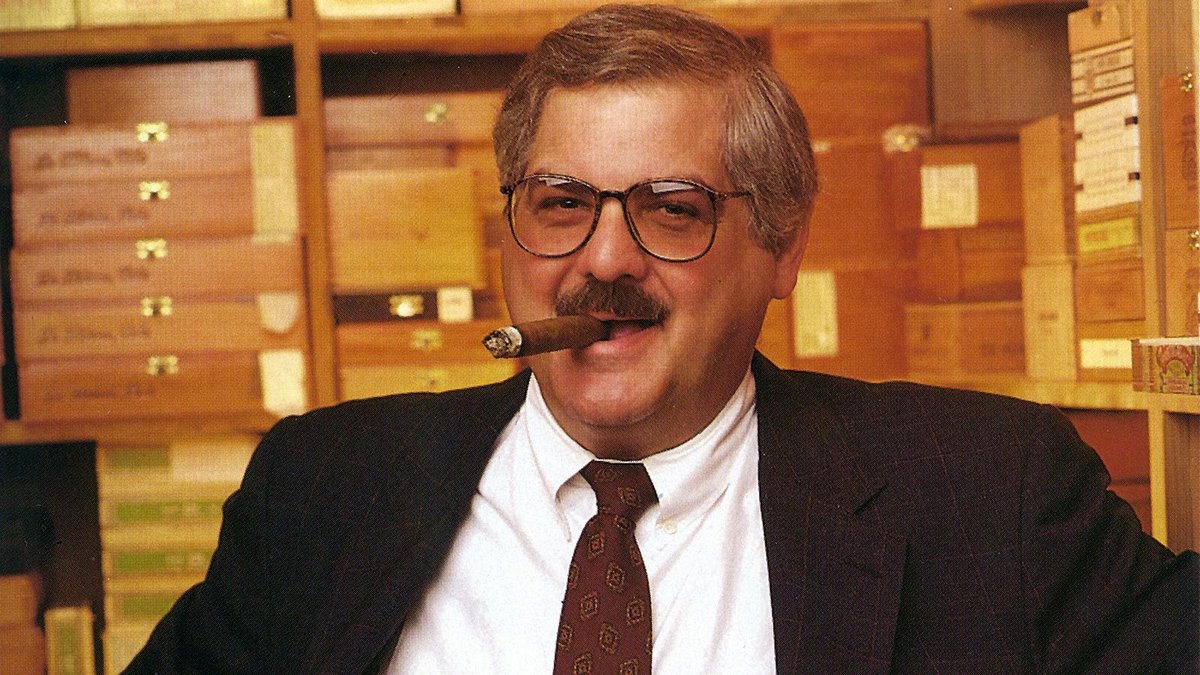
A jeweler’s son who sold beer at the Yale Bowl
Shanken was born October 4, 1943, in New Haven, Connecticut, where his father, Oscar, ran a small jewelry store. He took a business degree from the University of Miami in 1965 and an MBA from American University, in 1968 according to the company’s own history. Cigar Aficionado’s obituary says he graduated last in his class, and it preserves the line he liked to use about his hometown’s famous university: “I didn’t go to Yale. The closest I got was the Yale Bowl, where I sold cold beer on weekends.”
In 1968 he joined a small Wall Street investment-banking firm that dealt mostly in real estate. The turn toward wine came from a deal: a 1970 financing for a California vineyard. By his own account in his “50 Years” essay for Wine Spectator, he celebrated closing it by ordering a 1961 Pétrus at La Crémaillère in Banksville, New York. “It was $100,” he wrote. “I’d never had any good wine.”
The company history on Shanken News Daily adds a second turning point: a 1972 head-on collision near San Luis Obispo, California, and a hospital stay that gave him time to think, after which he concluded, “I loved wine, not real estate.” Wine Spectator’s obituary mentions only “a 1972 hospital stay,” so the details of the crash rest on the company’s account.
$5,000, 200 subscribers, one walk-up apartment
What he bought, in 1972 (some accounts put the date in 1973), was Impact, a beverage-alcohol trade newsletter with roughly 200 subscribers paying $48 a year. He financed it with $5,000 borrowed from his sister Elaine and ran it, per the company history, out of a one-bedroom walk-up on East 53rd Street in Manhattan. He kept his day job until 1975. His summary of the period: “I had jumped out of an airplane without a parachute.”
The wine tabloid he didn’t want to see die
Wine Spectator was not his idea. Bob Morrisey founded it in San Diego in 1976 as a free tabloid handed out in wine shops. Morrisey first asked Shanken to buy it in 1978 and got a no. In early summer 1979 he called again and said he would have to fold it. “I think the only reason I agreed to do it is that I didn’t want Wine Spectator to die,” Shanken wrote in his essay. Circulation at the time was about 5,000.
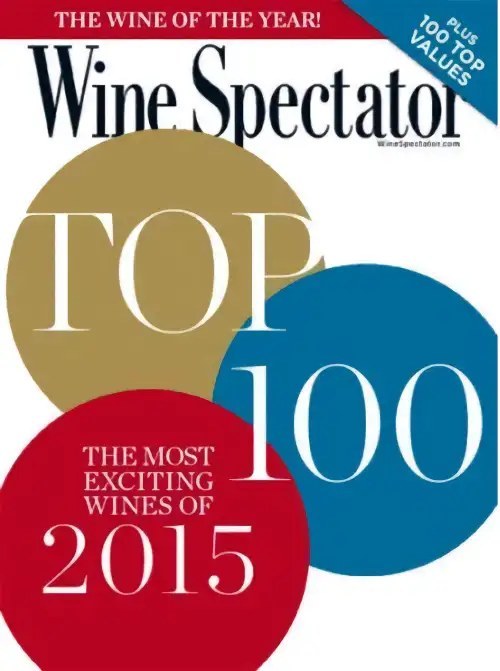
It was a long way from a sure thing. In 1986, by his own telling, his accountant begged him to sell: “It is bleeding cash” and “You are in over your head.” He didn’t. In 1987 he redesigned it as a full glossy magazine — circulation had reached 76,000 by then, per his essay — and the magazine’s own obituary puts the figure today at more than 385,000.
Along the way the magazine built the machinery that gave it influence far beyond its subscriber list:
- 1981: the Restaurant Awards program’s Grand Award is created, with 13 winners. There were 99 in 2026, according to Wine Spectator.
- Early 1980s: the Wine Experience tasting events begin; in 1982 Robert Mondavi asked Shanken to take over the California Wine Experience.
- 1983: the Wine Spectator Scholarship Foundation is founded. The company says the Wine Experience has since raised more than $40 million.
- 1985: Wine Spectator adopts the 100-point scale for its reviews.
That last item needs a caveat: neither Shanken nor the magazine invented the 100-point scale — others were scoring wine that way before 1985, and Robert Parker’s system is its own story. But adopting it put a single, legible number on every bottle Wine Spectator reviewed. Shanken’s own framing of what he was selling: “We’re not in the publishing business, we’re in the education business.”
The restaurant that didn’t exist
The awards program that gave the magazine so much reach also produced its most embarrassing episode. In 2008, Robin Goldstein, author of The Wine Trials, invented a Milan restaurant called Osteria L’Intrepido — complete with a fake website, menu and wine list — paid the $250 entry fee, and won a Wine Spectator Award of Excellence. He then revealed the whole thing at an American Association of Wine Economists meeting in Portland, Oregon. Goldstein said the fictional restaurant’s wine list had been assembled from some of the lowest-scoring Italian wines Wine Spectator itself had ever reviewed, according to the Wine Economist blog.
The magazine’s response, as CBS News reported, was to call it “an elaborate hoax” and “malicious duplicity.” Its editor, Thomas Matthews, also wrote: “Wine Spectator was deceived, and must be more vigilant.” The program went on, and the plaques in restaurant entryways are still there.
“I don’t want to die without having a cigar magazine”
Shanken had smoked cigars since college, and in February 1984 he ran his first cigar column in Wine Spectator, titled “I Love a Good Smoke.” His editors told him he shouldn’t be writing about cigars in a wine magazine, according to Cigar Aficionado’s account of the magazine’s origins. He kept at it anyway. After a 1991 trip to Cuba produced a Wine Spectator cover story, “The Allure of Cuban Cigars,” he told himself on the flight home: “I don’t want to die without having a cigar magazine.”
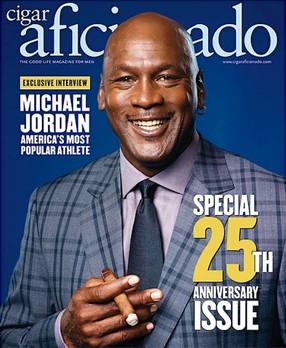
His senior executives disagreed — “Every single one of them told me it was a bad idea,” he later said. Cigar Aficionado’s first issue appeared in Fall 1992 with a cigar, not a celebrity, as its first cover portrait, per the magazine’s own history. It was profitable from that first issue.
What followed was the 1990s cigar boom, and the magazine’s fortunes and the industry’s moved together:
- Premium cigar imports to the U.S. ran at roughly 100 million a year through much of the 1980s.
- 1993: 117.8 million. Cigar Aficionado’s Big Smoke events begin.
- Early 1994: Shanken interviews Fidel Castro in Havana; the interview becomes the Summer 1994 cover story.
- April 23, 1996: Shanken buys John F. Kennedy’s humidor at Sotheby’s for about $575,000.
- 1997: imports reach nearly 418 million. The November/December 1997 issue runs 586 pages, the largest the magazine ever published.
The boom ended by late 1997 or 1998. How much of it the magazine caused and how much it simply rode is a fair argument; what isn’t arguable is that for several years Cigar Aficionado was a central voice of the boom, and the man who’d been told not to write about cigars in a wine magazine was its face.
The rest of the company, and the giving
M. Shanken Communications grew well past its two flagships. Shanken bought Malt Advocate in 2010 and renamed it Whisky Advocate in 2011; the company also publishes Market Watch, Shanken News Daily and Food Arts. Outside the magazines, he put his events machine to work for causes: the Wine Experience’s scholarship fundraising, A Night to Remember for prostate cancer research, and the Els for Autism Foundation, which he co-founded in 2009.
The magazine industry gave him its highest honor in February 2019, when the MPA — the Association of Magazine Media — presented him with its Lifetime Achievement award. Jonathan Newhouse said at the time: “Marvin belongs to the elite coterie of magazine makers, the geniuses of our business.” Gerry Ruvo’s line went further: “The holy trinity of wine in America is Ernest Gallo, Robert Mondavi, and Marvin Shanken.”
Shanken himself resisted the mogul label. “People think of me as a businessman or an entrepreneur,” he said. “I’m really an editor.”
The last headline
Marvin Shanken died October 29, 2026, at 83. The New York Times reported that the cause was glioblastoma, an aggressive brain cancer. He is survived by his wife, Hazel; his sisters Elaine — the one who lent him the $5,000 — and Susan; his daughters Samantha Shanken Baker, Allison Cohen and Jessica Shanken Reid; and four grandchildren.
The bottle that started it all cost $100 and was ordered by a real-estate banker who, by his own admission, had never had any good wine. He never made a drop of it. He just told people what he thought — and built a business out of the fact that they listened.
Sources
- Wine Spectator obituary
- Cigar Aficionado obituary
- Shanken News Daily obituary
- M. Shanken Communications 50th year (company history)
- Marvin Shanken, "50 Years" essay, Wine Spectator
- Wine Industry Advisor
- Cigar Aficionado, "Before Cigar Aficionado"
- Cigar Aficionado, Cover Stars
- CBS News on the 2008 hoax
- The Wine Economist on the 2008 hoax
- New York Times obituary