

Juan Atkins, the Detroit producer widely credited as the originator of techno, died Saturday, Oct. 31, 2026, at 64. His agency, Greensmith Artists, told Resident Advisor that he was found unresponsive in a Mexico City hotel room before a scheduled performance at YuYu Cine Club and was pronounced dead after being taken to a hospital, according to Mixmag and the Guardian. No cause of death has been announced.
By the sources’ account, Atkins spent four decades turning the sound of a fading industrial city into music about the future, drawing on a future-studies class, Alvin Toffler’s books and a Korg synthesizer.
Three friends in Belleville
Atkins was born in Detroit in 1962 and later moved with his family to Belleville, Michigan. “I just wasn’t used to going to school on a yellow bus and living on a dirt road,” he told the Guardian in 2024. In junior high he met Derrick May and Kevin Saunderson, and the three became known as the Belleville Three, credited as the architects of Detroit techno.
The Guardian’s Nov. 3 appreciation, by Whitney Wei, adds the details that made him the group’s starting point:
- He was the oldest of the three.
- He was the first to buy a Korg MS-10 synthesizer.
- He taught the other two how to DJ on turntables.
- As a teenager he listened to “The Midnight Funk Association,” a late-night radio show hosted by Charles “The Electrifying Mojo” Johnson, which mixed Prince, Parliament-Funkadelic, Kraftwerk and Yellow Magic Orchestra.
Cybotron and a future-studies class
Atkins formed Cybotron with Rik Davis in 1980, according to Rolling Stone, Fox 32 and AllHipHop. The Guardian says the two bonded at Washtenaw Community College in Michigan over Alvin Toffler’s books Future Shock and The Third Wave, and that Toffler’s ideas inspired Atkins’s choice of names such as Metroplex and Cybotron. “I had a class called future studies, about the transition from an industrial society to a technological society,” Atkins told the Guardian in 2014. “I just applied a lot of those principles to my music-making.”
Their one album together, Enter, came out in 1983, and the duo split in 1985, per Rolling Stone. The Guardian says Davis was drawn toward rock, and quotes Atkins on the breakup: “I think that was where he wanted to be, in that album-orientated rock [scene].” The record that outlived the partnership was “Clear.” The Guardian reports that dozens of artists have sampled it, and that Missy Elliott made it the backbone of her 2005 single “Lose Control,” which reached No. 3 on the U.S. Billboard chart; AllHipHop likewise says the Cybotron recording is the foundation of Elliott’s track.
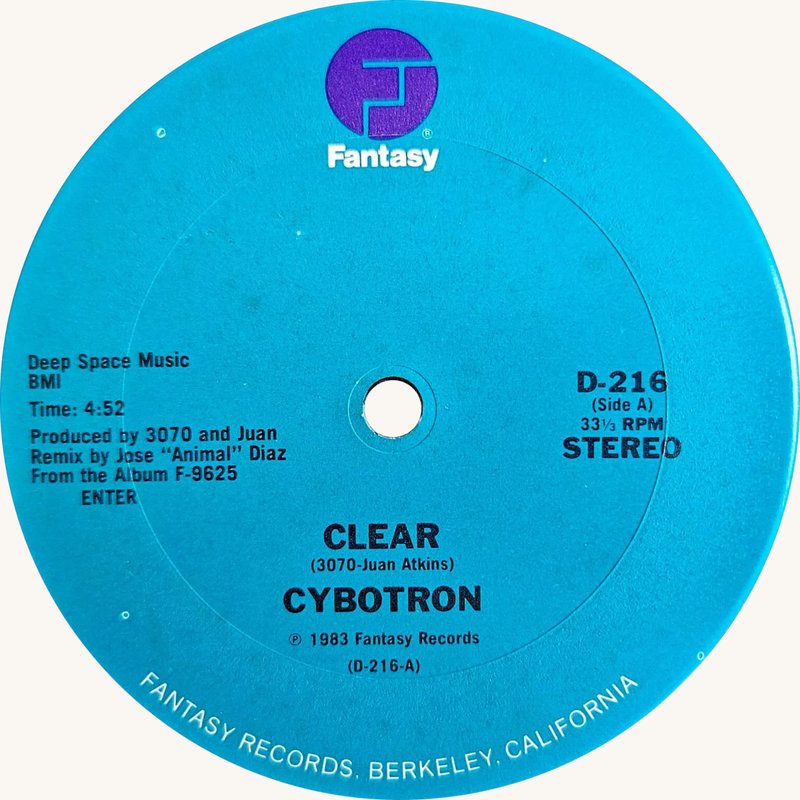
Watch and listen
Model 500, Metroplex and the name
After the split, Atkins launched his own label, Metroplex, in 1985 and began recording solo as Model 500. His first single under that name, “No UFO’s,” helped carry Detroit’s developing sound to the United Kingdom, according to Fox 32, citing Billboard. His work across the years, as the sources list it:
- Model 500: “No UFO’s” and “The Chase” (Guardian); he kept recording under the name for three decades (Rolling Stone).
- Metroplex: the label also released music by Anthony Shakir and DJ Bone (Guardian).
- Infiniti: the minimalist alias behind the 1998 album Skynet (Rolling Stone).
- Borderland: two albums with Moritz von Oswald, in 2013 and 2016 (Guardian).
- Cybotron, again: revived in 2023 with Laurens von Oswald, with the singles “Maintain the Golden Ratio” and “Parallel Shift” (Guardian).

The question of who named techno has a tidy answer and a messier one. The Guardian says Atkins was the first person to use the word with this hard electronic style, and Rolling Stone wrote in 2025 that he “conceived it and named it.” The route there ran through a 1988 Virgin Records compilation, Techno! The New Dance Sound of Detroit. Mixmag and AllHipHop say his track “Techno Music” appeared on it; the Guardian says May’s suggested label, “hi-tech soul,” was reportedly rejected and the compilation took its title from Atkins’s track. Rolling Stone says “No UFO’s” inspired the collection.
Atkins himself was wry about what the word became. “Nobody knew that it was techno music. Especially the Black kids in Detroit,” he told Rolling Stone in 2024. “All they knew was that this was a new sound. … When it got to Europe, Europe had to give it some kind of title.”
Why Detroit
The Guardian quotes Atkins from the 1996 documentary Universal Techno, filmed against the ruins of post-industrial Detroit: “I think that we probably wouldn’t have developed this sound in any other city in America.” And he never trusted the machines to do the feeling for him. “They make these synthesizers and keyboards with functions that allow you to get as close to a human feel as they possibly can,” he said in 1997, per Rolling Stone. “I think this is the beauty of Detroit, we were able to put that emotion into our music.”
The tributes
Saunderson posted on Instagram that “Juan was the originator of Techno, a true visionary who opened the door for so many of us, myself included,” and recalled that Atkins showed him how to finish his first record, “Triangle of Love.” May said in a video, as Fox 32 and The Verge report: “He just went out and did his job the best way he could. Respect his legacy. Respect the effort. Respect the work. Respect the accomplishments.” Detroit Mayor Mary Sheffield said: “Today, millions of people dance to music that traces back to him and to our city,” per the Guardian.
Laurens von Oswald, who collaborated with Atkins to revive Cybotron in 2023, told the Guardian: “It’s particularly heartbreaking losing a man who gave the future its sound, knowing how much of his own future was still unwritten.”
Sources
- The Guardian, Ben Beaumont-Thomas, “Juan Atkins, pioneer of Detroit techno sound, dies aged 64” (Nov. 1, 2026)
- The Guardian, Whitney Wei, “Juan Atkins built a cybernetic future for music – but invested it with humanity” (Nov. 3, 2026)
- Rolling Stone, Daniel Kreps, “Juan Atkins, Techno Music Pioneer, Dead at 64” (Nov. 1, 2026)
- Mixmag, Megan Townsend, “Techno originator Juan Atkins has died aged 64” (Nov. 1, 2026)
- FOX 32 Chicago, “Juan Atkins, regarded as one of techno music’s founding fathers, dead at 64”
- The Verge, Richard Lawler, “Techno music co-creator Juan Atkins has died at 64” (Nov. 2, 2026)
- AllHipHop, “Juan Atkins Dies At 64; His Cybotron Sound Powered Missy Elliott’s ‘Lose Control’” (Nov. 2, 2026)