
Joe Redner owned the World Famous Mons Venus, the low-slung all-nude club on North Dale Mabry Highway that Tampa knew by sight. That is the fact that leads every obituary, and it is the least interesting thing about him. Redner was arrested more than 150 times by his own count, sued the city, the county, and the state over and over, ran for office roughly nine times, and spent his last fifteen years fighting cancer and the Florida Department of Health at the same time. The through-line was never nudity. It was a stubborn, oddly earnest question he asked in 1991 and never stopped asking: “Is there true freedom in this country when we can’t do what we want even when it doesn’t hurt anybody?”
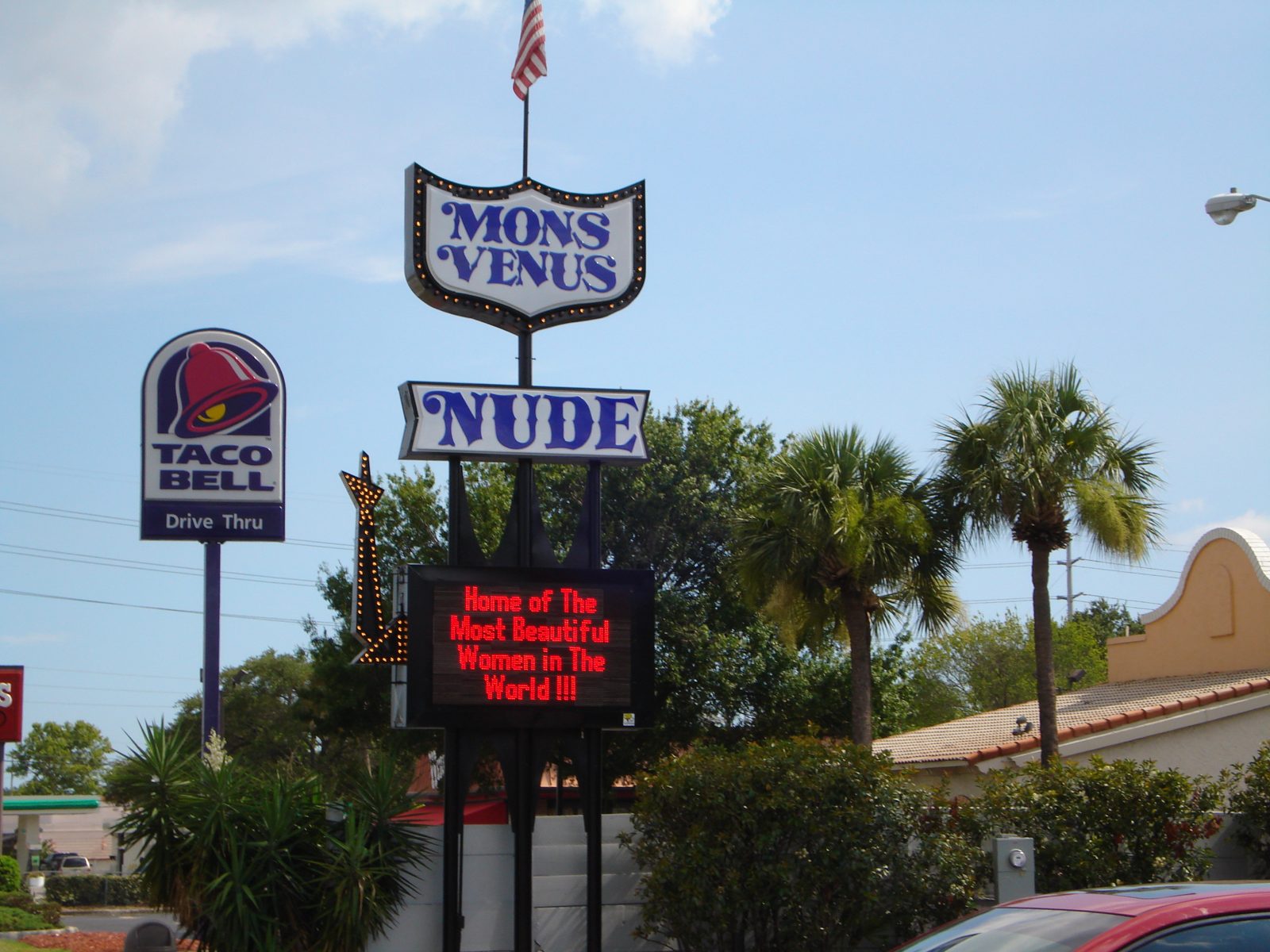
The Mons Venus sign on North Dale Mabry Highway in Tampa. After Redner’s death, patrons left tributes at the club’s Dale Mabry sign. (File photo, not from that time.) Photo: Gnr21 / Wikimedia Commons, CC BY-SA 3.0.
From Hackensack to the carnival
Joseph Richard Redner was born July 2, 1940, in Hackensack, New Jersey. When he was 8, after his parents split, his mother Agnes moved him and his older brother William to Tampa, where she waited tables at a downtown drugstore. The family lived on her tips, which Redner put at about five or six dollars a day, according to the Tampa Bay Times. He dropped out of Chamberlain High School as a sophomore and drifted through odd jobs, five years in the carnival business, and a stint managing a go-go bar called the Deep South. Nothing about it suggested a man who would one day be cited in a federal appeals court opinion.
The Night Gallery and the first raids
In 1976 Redner turned a bar into the Night Gallery, his first all-nude club, and the Tampa police responded the way they would for years to come: they raided it. Many people were arrested, Redner among them; the St. Petersburg Times later put that year’s arrests at 36. Redner told Florida Trend the police “really went Gestapo.” His own reaction, which would become the organizing principle of his life, was simpler: “I wasn’t afraid of getting arrested.”
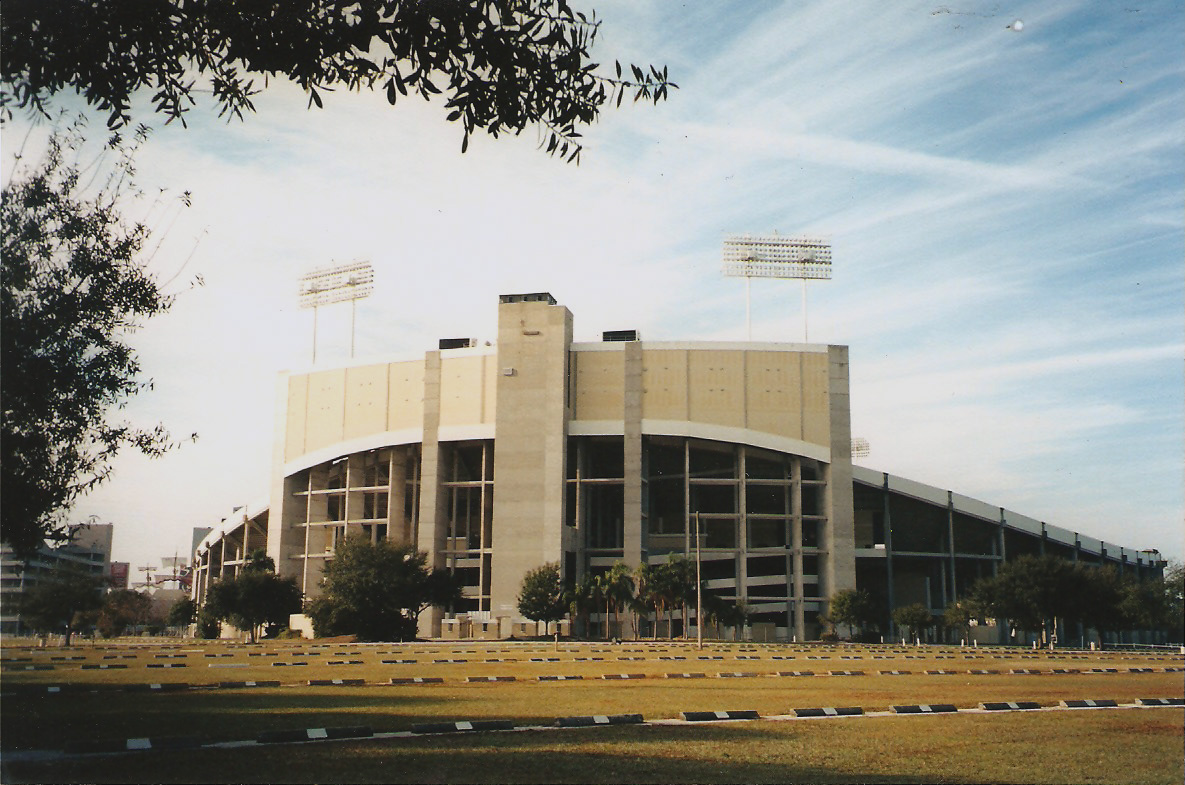
The World Famous Mons Venus
In 1982 (a minority of accounts say 1981) Redner opened the Mons Venus on North Dale Mabry Highway, according to the Times and Deadspin. Deadspin’s 2012 profile says he bought a bar called the Huddle Lounge and renamed it after a name he had seen in a book, though that detail rests on a single account. The club became an institution. By Redner’s own count his arrests passed 150. The charges, over the years:
- Lewd acts
- Indecent exposure
- Running a house of ill fame
- Zoning violations, which he called the authorities’ favorite
In 1983 he was caught snorting cocaine at a Tampa Bay Buccaneers game. He responded by quitting drinking and hard drugs, taking up exercise, and eventually going vegan, according to the Times. He also had a theory about who ordered the raids: “Never when we’ve had a female mayor did I get raided.”
“Dance is speech”
What separated Redner from other club owners who got hassled by the cops is that he kept going to court. The case most often cited is Redner v. Dean, decided by the Eleventh Circuit Court of Appeals in 1994, which grew out of his attempt to open an adult business in Citrus County; the court treated nude dancing as expressive conduct with some measure of First Amendment protection. Redner’s version of the argument was blunter than the court’s. “Dance is speech,” he told Deadspin. “It’s been speech since the beginning of time.”
The lawsuits paid. Deadspin reported he won more than $1 million in damages over the years, and the Times notes that a park in West Tampa was built with money from one of his suits against the city. In 2005, after the state took one of his properties by eminent domain, a jury reportedly awarded him more than $7 million, reasoning that the property’s highest and best use was adult entertainment, according to Wikipedia, citing the Tampa Bay Business Journal.
The six-foot rule
The fight Tampa remembers best was over the lap dance. In October 1999 the City Council held a hearing on a proposed rule requiring dancers to stay six feet from patrons. It ran 13 hours at the Tampa Convention Center and drew roughly 2,000 people, according to the Times. The rule’s champion was council member Bob Buckhorn, and the two men went at each other for about a decade. The ordinance went through the courts; accounts differ on exactly how the litigation shook out, but in practice the rule’s enforcement faded over time. Redner is often called the father of the lap dance.
The feud ended about as improbably as everything else in Redner’s life. “Our battles were epic and went on for probably a decade,” Buckhorn told the Times after Redner’s death. He went on to call him “iconic.” Redner, for his part, voted for Buckhorn for mayor. Buckhorn’s explanation, to WUSF: “I respect how he treats me.”
Nine campaigns and one flying chair
Redner never stopped trying to join the governments he kept suing. By Florida Trend’s count he ran roughly nine times:
- Hillsborough County Commission
- Tampa City Council
- Florida House, 2010
- Florida Senate, 2016, as an independent

His closest documented call came in March 2007, when he finished second in a six-way race for City Council District 1 and forced a runoff against incumbent Gwen Miller. He lost 56.49 percent to 43.51 percent. Observers told the Times that his offer of free admission to the Mons Venus for anyone wearing an “I Voted” sticker may not have helped.
Somewhere in the 2000s, during a cable-access debate, host Tony Katz threw a chair at him; the clip was picked up widely, by about 300 stations according to Wikipedia. Redner’s assessment of the damage: “a little swelling on my arm.” He hosted his own public-access show, First Freedom TV, on the First Amendment and civil liberties, and when Occupy Tampa protesters needed somewhere to camp, he let them stay for months at a West Tampa park, according to the Times.
The pride lawsuit
In 2005 Hillsborough County barred county recognition of gay pride events. Redner sued on First Amendment grounds, arguing prior restraint and the right to receive information. When the county challenged whether he had standing to bring the case, he stated in a court filing that he was gay. The New York Times obituary says he was not. Both things are in the record. His public response to the whole episode was a question, not a clarification: “Why is everybody so afraid to be a homosexual?” The county repealed the ban in 2013 by a 7-0 vote.
Stage 4, and the case he lost
In 2011 Redner was diagnosed with Stage 4 inoperable lung cancer. “Stage 4 lung cancer, 4 percent live past five years,” he said. He went through treatment and was cancer-free for ten years before being treated for another cancer in 2022.
The diagnosis produced his last big legal fight. Florida voters approved medical marijuana in 2016 with language allowing patients to “acquire, possess, use, deliver, transfer, and administer” it. Redner, a raw vegan by then, wanted to grow his own and juice it, and in 2017 he sued the Florida Department of Health for the right to do so. A Leon County judge, Karen Gievers, ruled in his favor in 2018. On April 3, 2019, the First District Court of Appeal reversed, holding that “use” does not mean “grow” or “process,” according to WUSF and Health News Florida. The Florida Supreme Court declined to hear the case. Some accounts describe this as a victory for Redner; it was not. He lost.
Beer, and a handoff
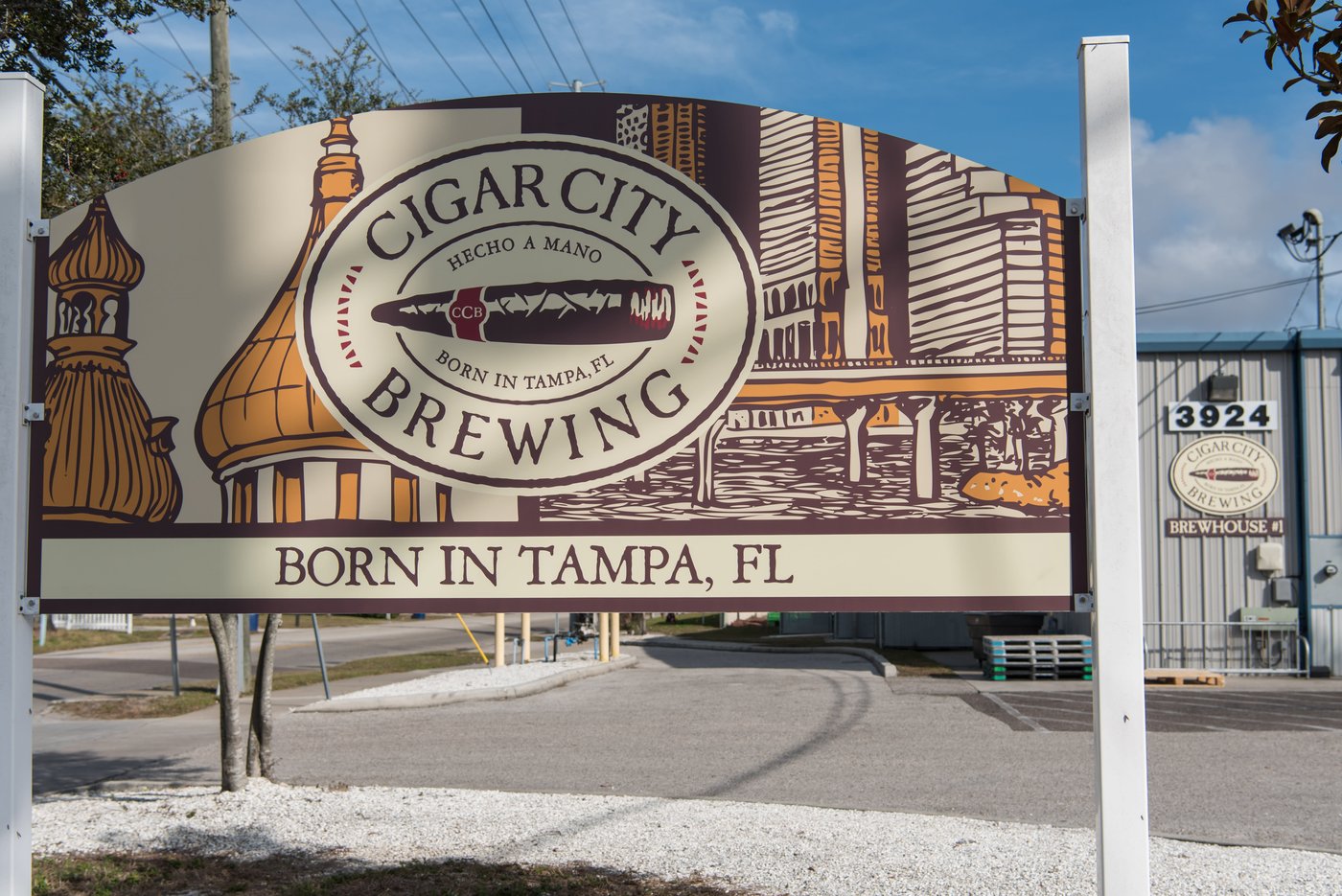
The family business diversified in a direction nobody saw coming. His son Joey founded Cigar City Brewing in Tampa in 2009 with his father as an investor; the brewery was sold to Oskar Blues in March 2016 with Joey staying on as CEO. Joe also owned Florida Avenue Brewing and the Brew Bus.
In May 2025 he handed operations of the Mons Venus to Don Kleinhans, owner of the 2001 Odyssey and his longtime rival, while keeping the property. Kleinhans called him a mentor and a friend.
“Iconic” is the right word
Redner died Friday, Oct. 16, 2026, in his sleep at his home in Tampa. He was 86. His daughter Joy Lynn Redner announced it on Facebook: “He died peacefully in his sleep.” His longtime lawyer, Luke Lirot, said the lung cancer had returned, according to WUSF. He is survived by his children Teresa, Joy Lynn, and Joey; his companion, Edie Burns; and nearly a dozen grandchildren. In the days after, patrons left tributes at the Mons Venus sign on Dale Mabry.
Buckhorn, his old adversary, said “‘Iconic’ is the right word.” City Council chair Alan Clendenin called him “a Tampa original, a successful entrepreneur, a defender of individual liberties.” Redner was an atheist and a progressive who ran a strip club, got arrested more than 150 times, and won a lawsuit that ended up paying for a park. In a 2022 interview he offered his own summary, and it is hard to improve on: “I’ve never regretted anything in my life that didn’t hurt somebody.”
Sources
- WUSF, “Joe Redner, Tampa strip club owner, free speech champ and political activist, dies at age 86”
- Tampa Bay Times obituary
- Tampa Bay Times, “5 ways ‘strip club king’ Joe Redner changed Tampa”
- FOX 13 Tampa Bay
- The New York Times obituary
- Wikipedia, “Joe Redner”
- WUSF / Health News Florida, “Tampa Businessman Joe Redner Plans to Appeal Marijuana Juicing Ruling” (April 2019)
- Deadspin, “How Joe Redner Invented The Lap Dance, Built A Strip-Club Empire, Became A Model Citizen, Fought For Your Rights, And Beat Cancer” (2012)
- Florida Trend, “Joe Redner is a ‘Florida Icon’”