
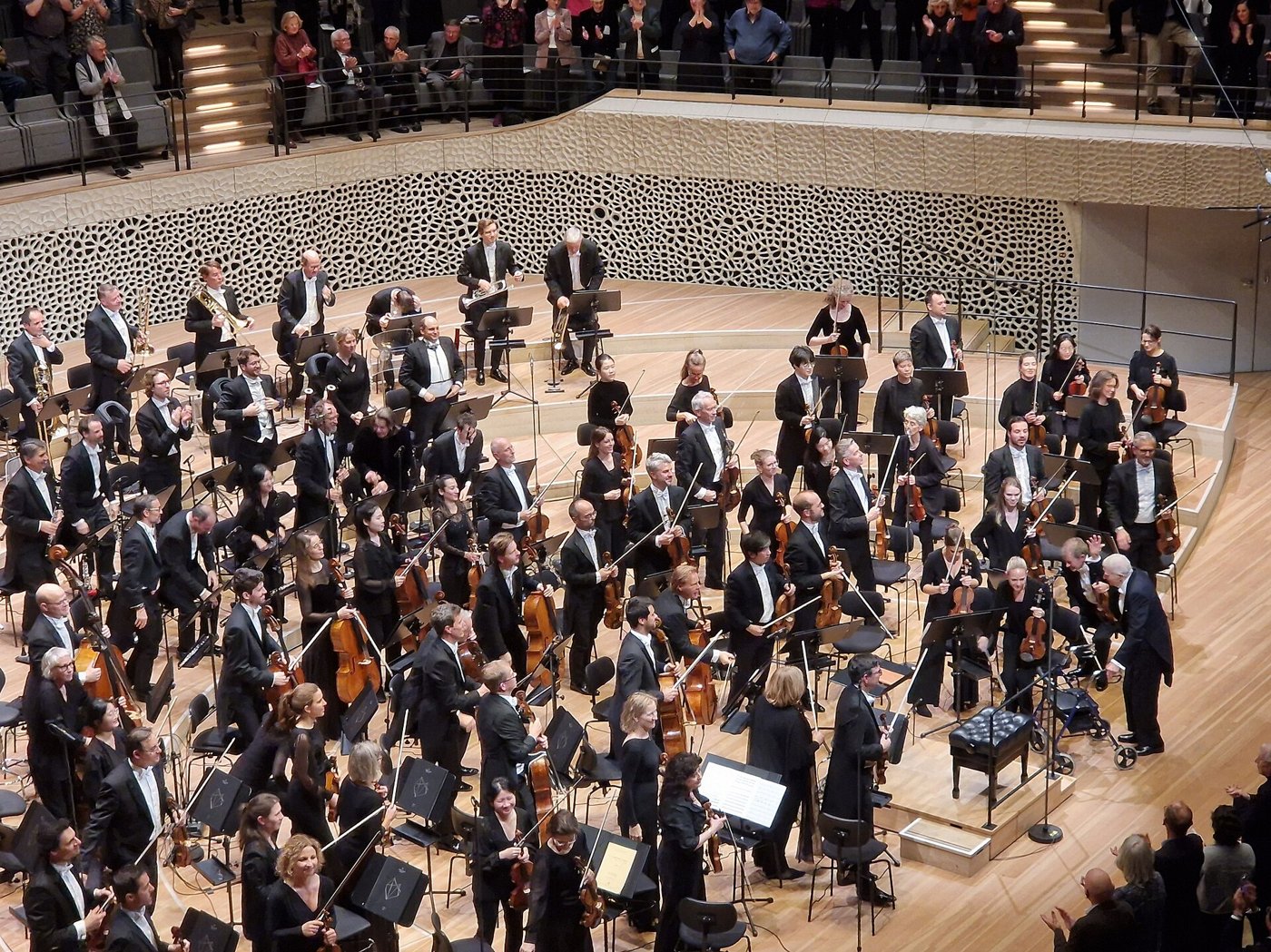
Herbert Blomstedt planned to conduct until he was 100. His management said he spoke of it often. He very nearly got there. On May 15, 2026, at 98, he came onto the stage at Davies Symphony Hall in San Francisco in a wheelchair to conduct Mahler’s Ninth Symphony. During the third movement the performance stopped, and stayed stopped for several minutes. He was replaced for the next two nights and canceled the rest of his 2026 dates. He died on Wednesday, Nov. 4, 2026, at his home in Gothenburg, Sweden, at 99, eight months short of the birthday he had been working toward.
Springfield to Stockholm
He was born Herbert Thorson Blomstedt on July 11, 1927, in Springfield, Massachusetts, to Swedish parents. His father, Adolf Blomstedt, was a Seventh-day Adventist missionary; his mother, Alida Thorson, was a pianist from Golden, Colorado. The family went back to Sweden in 1929, and he was raised in Sweden and Finland. He studied violin and organ at the Stockholm Royal College of Music and musicology at Uppsala, then conducting with Igor Markevitch and Jean Morel at Juilliard, at Darmstadt in 1949, and Baroque music with Paul Sacher in Basel.
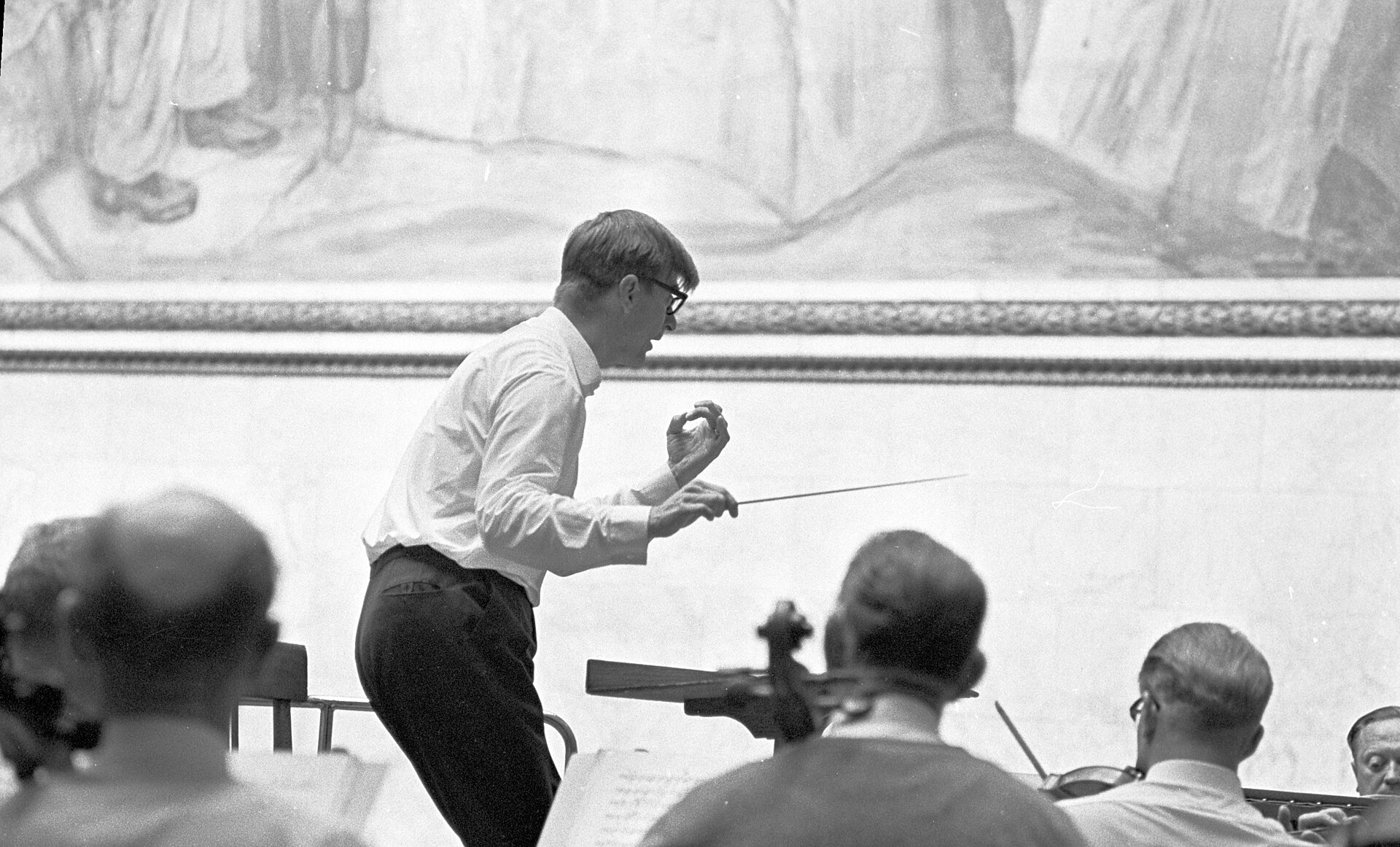
The Juilliard money was running out when he made the move that set up the rest of his career. He showed up unannounced at Leonard Bernstein’s apartment. He left with a scholarship to study with Bernstein at Tanglewood. He admired Bernstein’s musicianship and disliked his flamboyant podium manner. He later became known for minimal, refined gestures, and for conducting without a baton.
The credentials came fast after that: the Koussevitzky Conducting Prize in 1953, a professional debut with the Royal Stockholm Philharmonic in 1954, the Salzburg Conducting Competition in 1955.
The posts
What followed was a career of long tenures rather than a single famous one:
- Norrkoping Symphony, 1954 to 1962 or 1963 (sources differ)
- Oslo Philharmonic, 1962–68
- Danish Radio Symphony, 1967–77
- Staatskapelle Dresden and the Semperoper, 1975–85
- Swedish Radio Symphony, 1977–82
- San Francisco Symphony, music director, 1985–95
- NDR Symphony Hamburg, 1996–98
- Leipzig Gewandhaus Orchestra, 1998–2005
Dresden took him two years to accept. He had never worked in a communist country. After Leipzig he held laureate and honorary posts with the Bamberg Symphony and the NHK Symphony in Tokyo, and the Vienna Philharmonic made him an honorary member in 2019.
The Sabbath rule
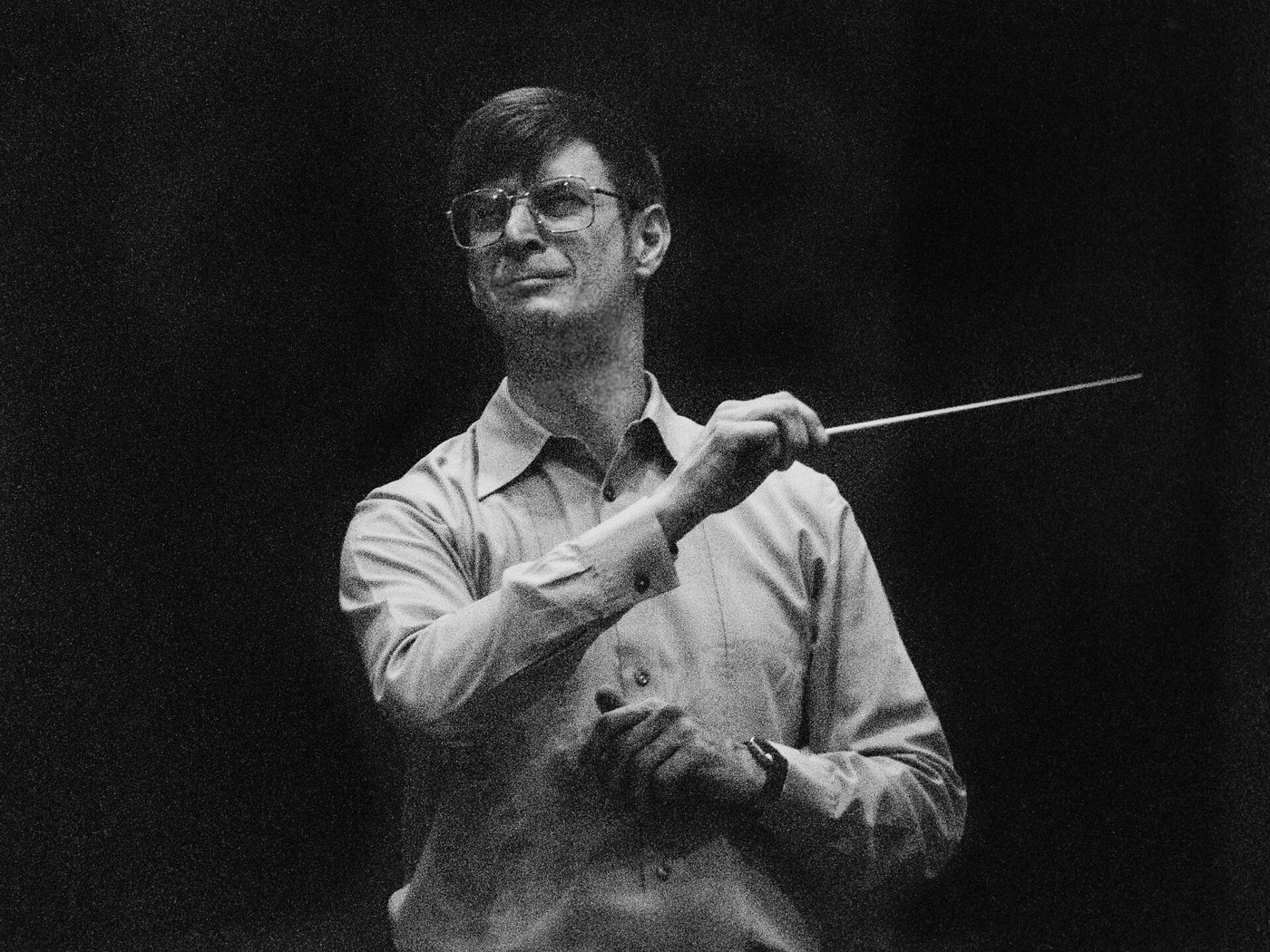
He was a devout Seventh-day Adventist all his life, and he kept to one rule about the Sabbath. He would not rehearse on Friday nights or on Saturdays. He would conduct concerts on those days, because he saw himself as a preacher of music rather than a man at work. He was a vegetarian. He collected books, about 35,000 of them, most of which he left to the Gothenburg University Library. Lothar Schacke, his manager for almost four decades, remembered browsing antique bookstores with him.
The records
The San Francisco years produced the recordings most people know him by: complete Nielsen and Sibelius cycles for Decca, a Gramophone Award in 1991 for Nielsen’s Second and Third symphonies, and two Grammys for Best Choral Performance, for Orff’s Carmina Burana in 1993 and the Brahms German Requiem in 1996. In Leipzig he recorded Beethoven and Bruckner cycles; in Dresden, Schubert. Decca collected his recordings for the label in a 33-CD set in 2023.
The honors kept coming into his tenth decade: the Rolf Schock Prize in 2014, the Leonie Sonning Music Prize in 2016, the Brahms Prize in 2017, Germany’s Order of Merit (Knight Commander’s Cross) in 2022, Opus Klassik’s lifetime award in 2023 and the Praemium Imperiale for music in 2026.
No baton, no stress
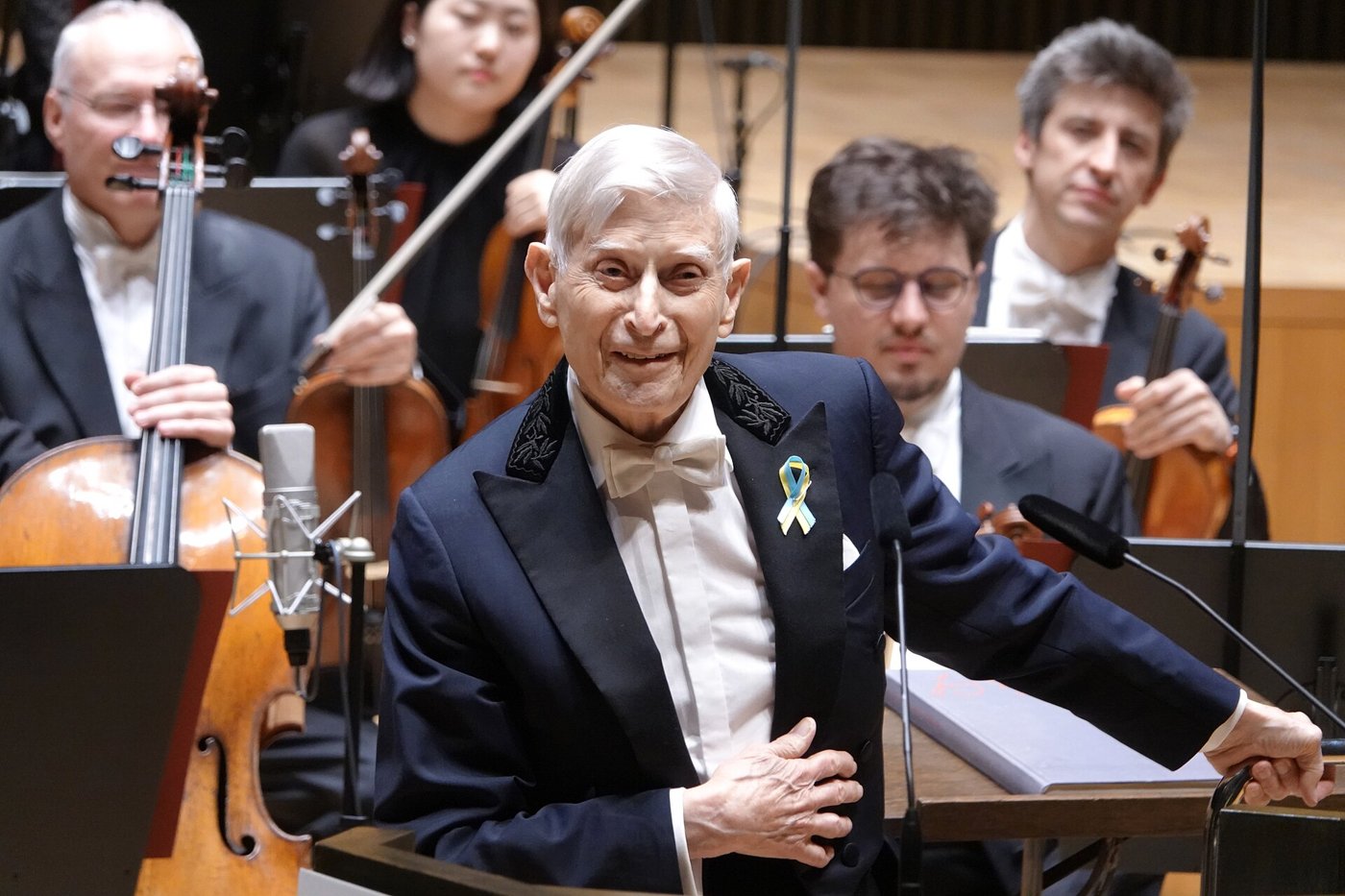
In his later years he conducted without a baton, with small, refined gestures. He was plain about how he chose his work. “I only do things I absolutely love,” he said. “I only conduct music that matters to me.” He told DW in 2020: “My mission is to bring good music to as many people as possible.” Esa-Pekka Salonen recalled him saying, “I refuse to have any stress.”
He described the job to CBS Sunday Morning in 2025 this way: “Every bar, every note is shared by us, and it’s a very intense communication.”
The last season
He was still on the road in his late 90s: San Francisco in February 2025, the NHK Symphony in Tokyo in October 2025, Bruckner’s Ninth at the Elbphilharmonie in Hamburg in November 2025, and the Mahler Ninth with the Detroit Symphony in May 2026. His last performance, on May 15, 2026, was in San Francisco.
His calendar had been booked into 2027, including a concert with the Vienna Philharmonic in June, just before the 100th birthday. “Until the very end, we had hoped to celebrate his 100th birthday with a concert together,” said Daniel Froschauer, the orchestra’s chairman.
Quick facts
- Born: Herbert Thorson Blomstedt, July 11, 1927, Springfield, Massachusetts; raised in Sweden and Finland
- Died: Nov. 4, 2026, at home in Gothenburg, Sweden, at 99
- Training: violin and organ, Stockholm Royal College of Music; musicology, Uppsala; conducting at Juilliard (Markevitch, Morel), Darmstadt and Tanglewood (Bernstein); Baroque with Paul Sacher, Basel
- Debut: Royal Stockholm Philharmonic, 1954
- Principal posts: Norrkoping, Oslo, Danish Radio, Dresden Staatskapelle, Swedish Radio, San Francisco Symphony (1985–95), NDR Hamburg, Leipzig Gewandhaus (1998–2005)
- Awards: two Grammys (1993, 1996); Gramophone Award 1991; Praemium Imperiale 2026
- Last performance: May 15, 2026, San Francisco Symphony, Mahler’s Ninth
- Survivors: four daughters and seven grandchildren; his wife, Waltraud “Traute” Petersen, married in 1955, died in 2003
The last headline
Herbert Blomstedt died Wednesday, Nov. 4, 2026, at his home in Gothenburg, surrounded by family. The death was announced by his management, KünstlerSekretariat am Gasteig. No cause was given; the statement referred to “a series of mounting health challenges.” He would have turned 100 on July 11, 2027.
“His greatest motivation always was to serve the music,” the statement said. “He often spoke of his wish to continue conducting until his 100th birthday.” Manfred Honeck of the Pittsburgh Symphony called him “one of the greatest conductors and a beacon of humanity.”
He set the finish line at 100. He stopped at 99, in the third movement of the Mahler Ninth, with the Vienna Philharmonic still on the calendar for June.