
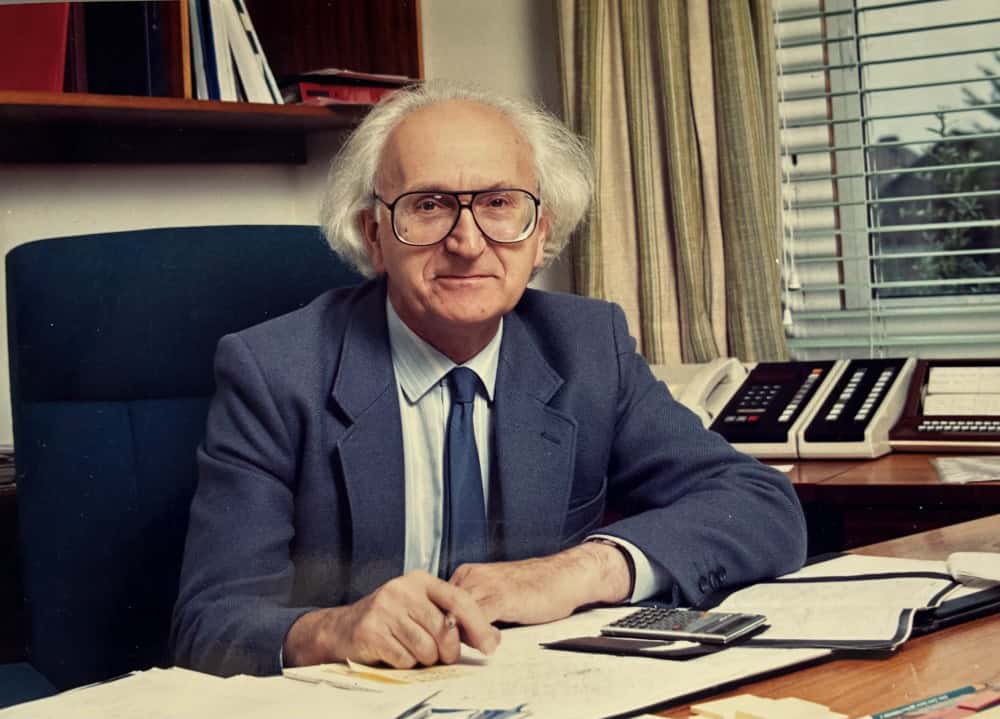
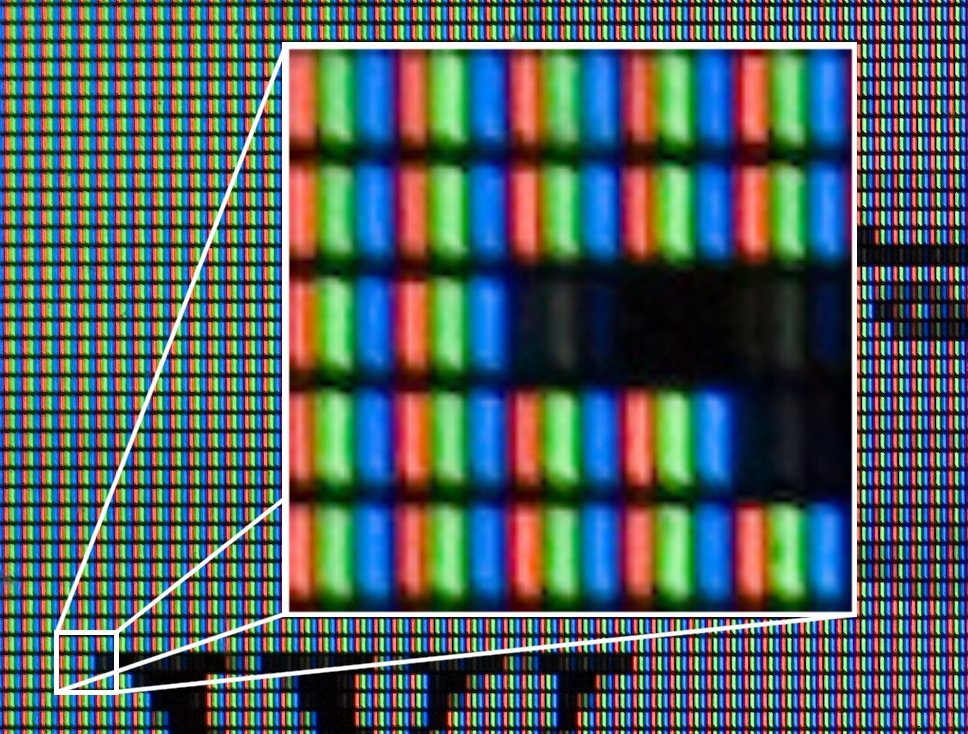
Look at the screen you are reading this on. Odds are it is a liquid-crystal display, and one big reason LCDs became reliable enough to be everywhere traces back to a British defense lab in the Malvern Hills that wanted a thin screen for a hand-held radar. Cyril Hilsum was a senior scientist at the center of that effort. He did not invent the LCD, and chemists at the University of Hull made the molecule that rescued it. But he helped set up and lead the program that sent them looking. He died Sept. 23, 2026, at 101.
A street peddler’s son from the East End
Hilsum was born May 17, 1925, in London’s East End, the second of three sons of Jewish parents: Benjamin Hilsum, a street peddler, and his wife, Ada. He went to Raine’s Foundation School, then University College London, where he finished a physics degree in 1945.
Twenty years in Britain’s defense labs
His early career moved from one government lab to the next:
- 1945: the Royal Naval Scientific Service.
- 1947: the Admiralty Research Laboratory in Teddington.
- 1950: the Services Electronics Research Laboratory in Baldock.
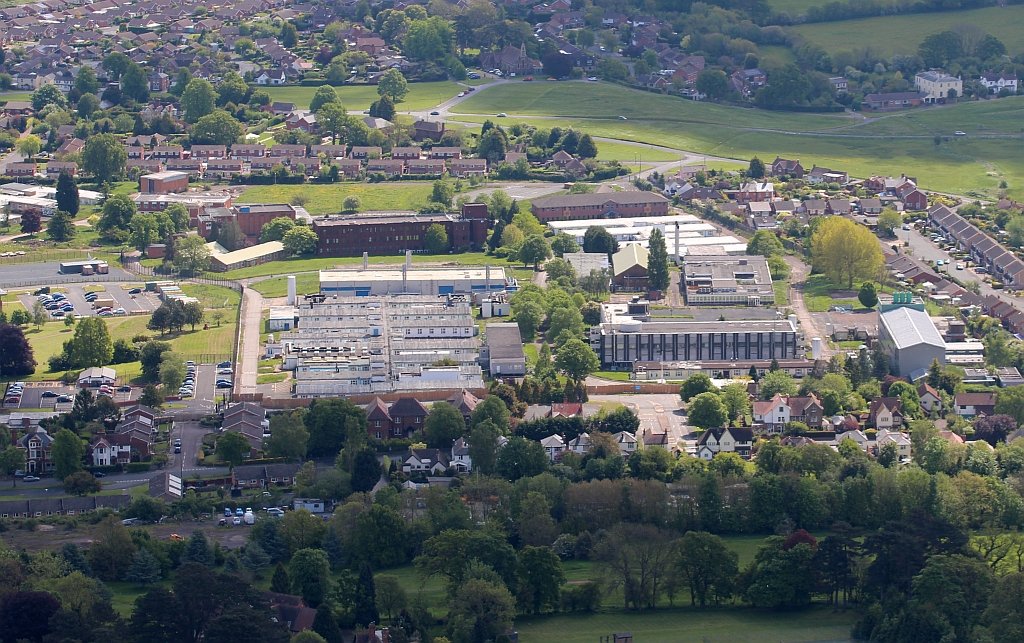
- 1964: the Royal Radar Establishment in Malvern, Worcestershire, a Ministry of Defence lab.
- 1974: chief scientific officer.
His specialty was semiconductors, especially gallium arsenide. He was one of the three British physicists behind the Ridley–Watkins–Hilsum theory, which showed that a semiconductor could have “negative resistance”: past a point, more voltage means less current. That became the basis for the Gunn diode, a workhorse source of microwaves. At Malvern he also helped create the UK’s first semiconductor laser.
A radar that fit in your hand, and a screen that didn’t
By the late 1960s, transistors and integrated circuits had made electronics small and low-powered. Screens had not kept up. As Hilsum put it in a 2010 history for the Royal Society’s journal Philosophical Transactions, a simple Doppler radar could run on a few volts and fit in the hand, but the cathode-ray tube to show its output needed high voltage and far more space.
In his telling, part of the push came from a politician. In March 1967 John Stonehouse, Britain’s minister of state for technology, visited Malvern and was surprised to hear that Britain’s royalties to RCA for its color TV tube cost more than Concorde. He authorized the lab’s director, George Macfarlane, to start a flat-panel display program. A working party led by Hilsum recommended in December 1969 that the government fund it, liquid crystals first. Formal approval never came, Hilsum wrote; the lab went ahead anyway, citing its urgent need for displays for its own portable radar sets.
A liquid that behaves like a crystal — when it behaves
A liquid crystal flows like a liquid, but its long, rod-shaped molecules stay lined up, a little like logs drifting down a river. A small voltage turns them, which changes how light passes through. Put a thin layer between two sheets of glass and you can switch part of a display dark or light with very little power.
The trouble was the materials. In Hilsum’s account, one leading family, the Schiff’s bases, gave erratic results; another, the stilbenes, broke down under ultraviolet light.
Betting on a chemist in Hull
Malvern held a meeting to find out who in Britain really understood liquid crystals. The answer, Hilsum wrote, was a group nobody in the defense world knew: George Gray’s chemistry department at the University of Hull, clearly the field’s leader. Gray’s group got Ministry of Defence funding and one job: find a stable liquid crystal. The chemical company BDH joined Malvern and Hull in a consortium to make whatever Hull found.
It took years of dead ends. By mid-1972, Hilsum recounted, Gray asked what the failures had in common and concluded that the weak spot was the chemical link in the middle of each molecule. Remove it, keep a cyano group on the end, and you got a new family: the cyanobiphenyls. The first, known today as 5CB, was made at Hull in 1972 by Gray, Ken Harrison and John Nash; their paper on the family was published March 22, 1973.
Single compounds still worked only over a narrow temperature range, so the next step was mixing them. Peter Raynes, a young Malvern physicist, found a way to predict how a blend would behave before anyone made it. In late August 1973 he produced E7, a four-part mixture that stayed liquid-crystalline from about −9°C to 59°C. Hilsum wrote that it met, in almost all respects, the specifications watch-display makers had given the lab, and that E7 “could be said to be the saviour of the LC industry” at a time when LCDs were suspected of being inherently unreliable. BDH turned the biphenyls into a business; by 1977, Hilsum wrote, it was the world’s largest maker of liquid crystals.
What it was worth
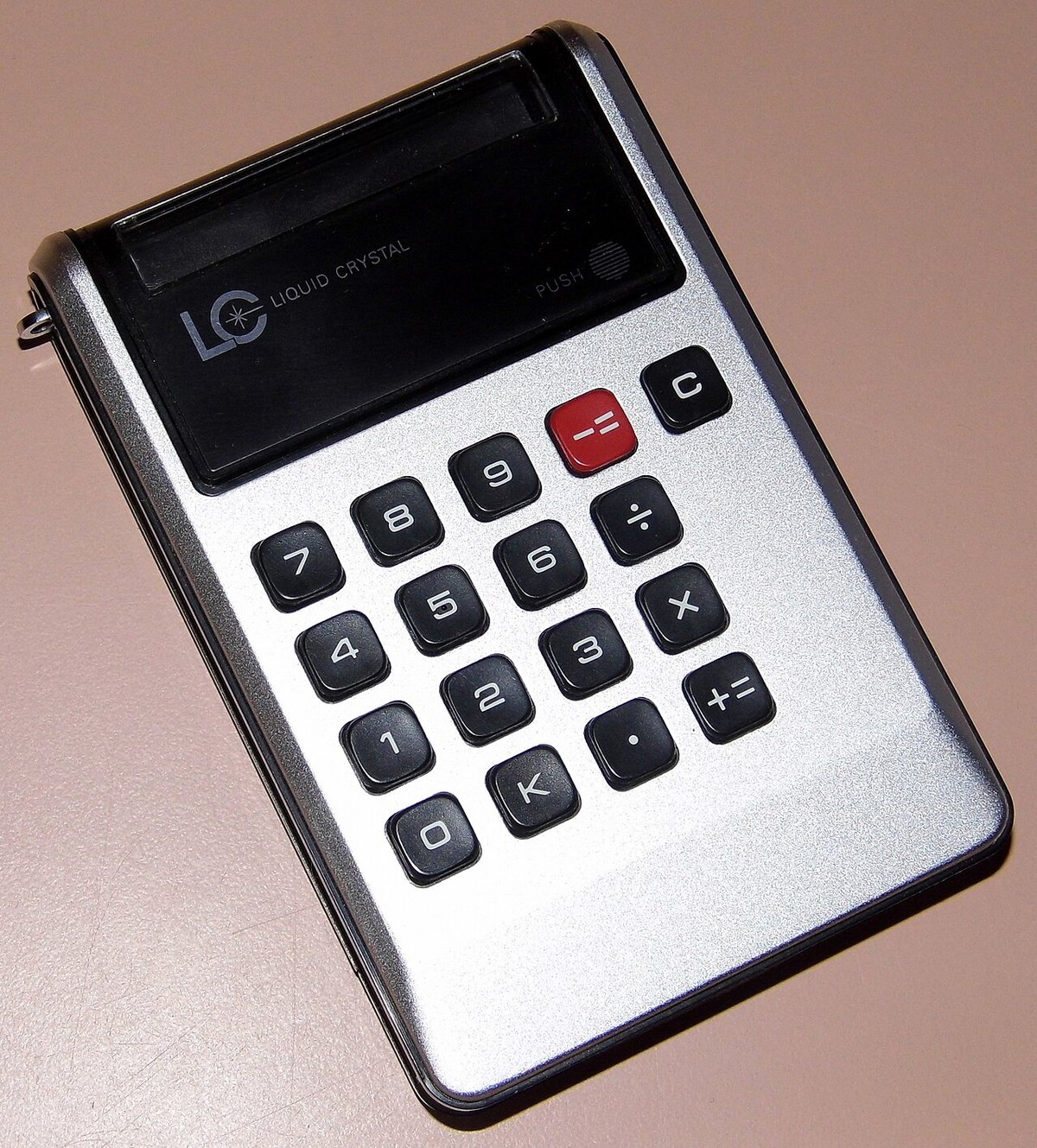
Physics World, the Institute of Physics’ magazine, credited Hilsum with leading the team behind the first stable liquid crystals usable in flat-panel displays, and said the invention brought the British government £100 million in royalties. Hilsum’s own history attaches that figure to a related Malvern invention, the supertwisted nematic display patented in 1982, which he wrote earned more than £100 million, the most of any Ministry of Defence patent.
In 1980 Hilsum shared the Rank Prize for Optoelectronics for the liquid-crystal work with Gray, Raynes, Harrison and J. Kirton. He later chaired the prize’s optoelectronics committee for 25 years.
Frances Saunders, a former Institute of Physics president, told Physics World that early on, “his vision was that the display would become the computer,” with chips on its back and a touch screen on its face. “He was right, of course,” she said, “as we now have tablets and smart phones that do just that.”
Sniper finders, industry, and a lab at home
His work on miniature radar also led to Claribel, a device that detected a bullet’s trajectory and could be used to locate snipers. After Malvern:
- 1983: chief scientist at GEC’s Hirst Research Centre; research director two years later.
- 1988–1990: president of the Institute of Physics.
- 1995: officially retired at 70, then kept working part-time as chief science officer of Infi-tex Ltd, a maker of textile force sensors.
He never really stopped. He built a lab in his house in Pinner, northwest London. His final invention, an ink with sensors that conducts electricity, earned him the last of more than 70 patents at 97. He celebrated his 100th birthday in 2025 at the Royal Society of Chemistry.
The honors
- Fellow of the Royal Academy of Engineering, 1978, and of the Royal Society, 1979.
- Foreign member of the U.S. National Academy of Engineering, 1983.
- CBE, 1990.
- The Royal Society’s Royal Medal, 2007.
- Since 2006, the British Liquid Crystal Society has awarded a Hilsum Medal every year.
The family
Hilsum married Betty Hilsum, and they had two daughters. Lindsey Hilsum is the international editor of Channel 4 News. Karen Burt, an engineer, died in 1997 at 42; Hilsum sponsored the Women’s Engineering Society’s Karen Burt Award in her name, given yearly to a newly chartered woman engineer. The Rank Prize’s tribute sent its thoughts to his partner, Professor Anne Dell, and to Lindsey Hilsum.
How he died
Hilsum died Sept. 23, 2026, at 101. The obituaries published so far have not given a cause of death.
Sources
- Physics World, “Cyril Hilsum, former GEC research boss and Institute of Physics president, dies aged 101”
- Rank Prize, “Professor Cyril Hilsum CBE FREng FRS (1925 – 2026)” (Oct. 7, 2026)
- Cyril Hilsum, “Flat-panel electronic displays: a triumph of physics, chemistry and engineering,” Philosophical Transactions of the Royal Society A (2010)
- Wikipedia, “Cyril Hilsum”
- Wikipedia, “George Gray (chemist)”
- Wikipedia, “4-Cyano-4′-pentylbiphenyl” (5CB)
- Wikipedia, “Gunn diode”