
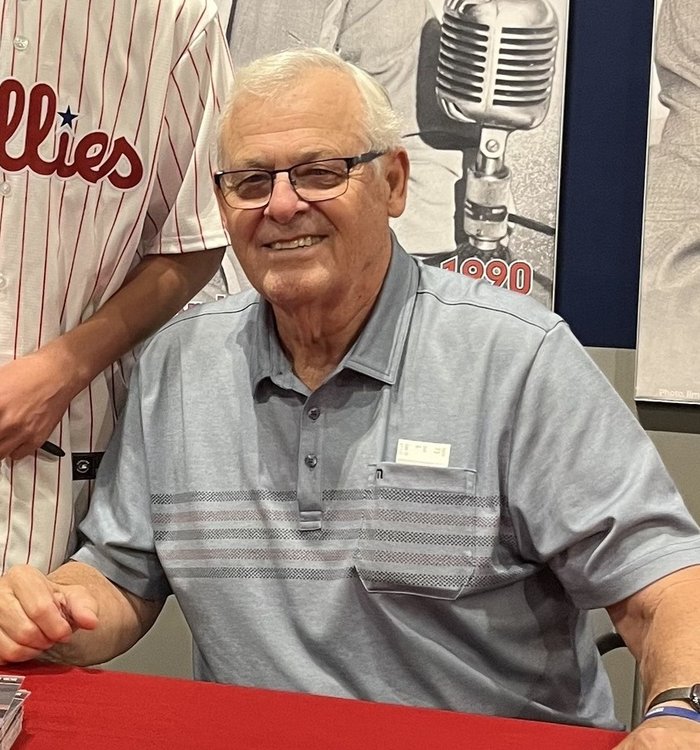
Bob Boone was behind the plate for two of the most replayed strikeouts of his era. In Game 6 of the 1980 World Series, Tug McGraw struck out Willie Wilson and the Phillies had their first championship, with Boone catching. On June 18, 1986, Don Sutton struck out Gary Ward to finish a 5-1 win over the Rangers for his 300th victory, with Boone catching. When he retired in 1990, at 42, nobody in major league history had caught more games. His father, Ray, played 13 seasons in the majors; his sons Bret and Aaron played a combined 26, and Aaron now manages the Yankees. Bob Boone died on Monday, Nov. 9, 2026, at 78. His son Bret announced it on Facebook the next morning, and the Phillies and the Major League Baseball Players Association confirmed it. No cause of death was reported.
San Diego, Stanford and a third baseman’s glove
Robert Raymond Boone was born on Nov. 19, 1947, in San Diego. His father, Ray Boone, debuted with Cleveland in 1948, was traded to Detroit in 1953, led the American League with 116 RBIs in 1955 and made two All-Star teams with the Tigers. The family traces its line to Daniel Boone, according to MLB.com and Wikipedia. “From Day 1 with Bob, that’s all it was with him — baseball,” Ray told the Kansas City Star in 1997. “You didn’t even have to say ‘Let’s play catch’ with him because he was always there.”
He went to Stanford as a third baseman who also pitched. In his 1969 senior season he hit .311 with seven home runs and went 9-1 with a 1.27 ERA in 85 innings, according to MLB.com. He left with a psychology degree and the credits to start medical school, a plan he pursued for a time and then dropped for baseball. The Phillies took him in the sixth round of the June 1969 draft, 126th overall, as a third baseman. With Don Money already at third and Mike Schmidt drafted in 1971, the Phillies converted him to catcher in the Florida instructional league in the fall of 1970. “I’m enjoying catching; I feel comfortable,” he told the Lancaster Sunday News at the time. “Still, I’m not certain I’m a catcher.”
The Phillies years
He debuted on Sept. 10, 1972, and was the regular catcher by 1973, after the Phillies traded Tim McCarver and John Bateman. He hit .261 with 10 home runs as a rookie and finished third in the National League Rookie of the Year vote. “He is the manager of this ballclub on the field,” manager Danny Ozark told the Courier-Post that summer, according to MLB.com. “He runs the team.” What followed in Philadelphia:
- 1976: first All-Star selection, in a league with Johnny Bench and Ted Simmons; the Phillies won 101 games and the NL East.
- 1977: hit .284 with 11 home runs; 101 wins and another division title.
- 1978: hit .283 and won his first Gold Glove at 30, ending Bench’s run of 10 straight, according to MLB.com; second All-Star selection.
- 1979: hit .286, won a second Gold Glove and started the All-Star Game; the season ended Sept. 13 with a knee injury in a collision with the Mets’ Joel Youngblood.
- 1980: hit .229 in the regular season, then .412 in the World Series against the Royals, with three hits and two RBIs in Game 1, and caught the final pitch of Game 6.
The 1980 pennant turned on a ball he hit back to Nolan Ryan. In the eighth inning of Game 5 of the NLCS in Houston, trailing 5-2, Boone hit a one-hopper to the mound that caromed off Ryan’s glove for an infield single instead of a double play; the Phillies scored five that inning and won 8-7 in 10, according to MLB.com. After Game 6 of the World Series he told manager Dallas Green: “We don’t do anything easy, do we?” The Inquirer adds that he had been treated for an ankle injury during the pennant celebration, and that a foul pop that fell out of his glove in the ninth inning of Game 6 was caught by Pete Rose at first base; Boone later said the mishap was Rose’s fault.
In 1981 he hit .211 in 76 games and played a central part in the players’ side of that summer’s strike. On Dec. 6, 1981, the Phillies sold his contract to the California Angels for a reported $250,000, according to MLB.com, which attributes the move to a front office that thought the 34-year-old was near the end. (A 1982 Sports Illustrated story put the price at $300,000, and Wikipedia floats the strike role as a possible motive.) “Boone is not a .211 hitter,” Angels manager Gene Mauch told the AP. “Anyway, that doesn’t concern me. I just want him to catch and throw and direct the pitching staff.” He caught 1,095 games for the Phillies, second in team history to Red Dooin, according to ESPN, and went into the Phillies Wall of Fame in 2005.
Seven seasons in Anaheim
The Angels got the durable catcher Mauch wanted. From 1982 to 1986, his age-34 through age-38 seasons, he averaged more than 142 games behind the plate, according to MLB.com. The highlights:
- 1982: threw out 21 of the first 34 runners who tried to steal on him, per Wikipedia; a third Gold Glove, the first by a catcher in both leagues, according to MLB.com; the Angels won the AL West.
- 1983: fourth and last All-Star selection.
- Sept. 30, 1984: caught Mike Witt’s perfect game, according to Wikipedia.
- 1985: at 37, led the AL with 147 games caught and threw out a league-best 41.6 percent of base stealers, according to Yahoo Sports.
- June 18, 1986: caught Sutton’s 300th win.
- 1986: another AL West title; in the seven-game ALCS loss to Boston he went 10-for-22 (.455) with a home run; at 38 he tied Norm Cash as only the second player that old to homer in an ALCS game, per MLB.com.
- 1986–88: three straight Gold Gloves, and a career-high .295 average in 1988.
“Bob Boone is a freak,” Mauch told the Los Angeles Times in the spring of 1986, according to Yahoo Sports. He led AL catchers in assists five times between 1982 and 1988 and in caught-stealing percentage three times, per MLB.com; Wikipedia credits him with throwing out Rickey Henderson 15 times in 26 tries, the best rate of any catcher on record against him.
Sutton, who died in January 2021, gave Boone an autographed glove for calling the 300th. “For me, the feeling was Don wanted it badly,” Boone told MLB.com that week. “When he got to the end of the game, we wanted to finish the game with a strikeout.” It reminded him, he said, of McGraw striking out Wilson six years earlier.
The record
After 1988 the Angels let him go in favor of Lance Parrish, and he signed a one-year deal with Kansas City. In 1989 he hit .274 and won his seventh Gold Glove at 41, still the oldest catcher to win one. A broken finger and the rise of Mike Macfarlane held him to 40 games in 1990, and a non-roster tryout with the Mariners in 1991 ended in camp. He finished with 2,225 games caught, the major league record at the time. Carlton Fisk passed him in 1993 (by one game, per Yahoo Sports) and Iván Rodríguez finished with 2,427 in 2011; Boone still ranks third. The career line:
- 19 seasons, 2,264 games: Phillies 1972–81, Angels 1982–88, Royals 1989–90
- .254 average, 1,838 hits, 303 doubles, 105 home runs, 826 RBIs; more walks (663) than strikeouts (608)
- Four All-Star selections: 1976, 1978, 1979, 1983
- Seven Gold Gloves: 1978, 1979, 1982, 1986, 1987, 1988, 1989 — all after age 30
- .311 in seven postseasons, per Yahoo Sports; 117 shutouts caught, per Wikipedia
Managing, and a front office
His second career started almost at once. In 1990 Pat Williams hired him as the first manager of a proposed Orlando expansion club, but the National League chose Miami and Denver instead. He managed Oakland’s Triple-A team in Tacoma in 1992, was the Reds’ bench coach in 1994 (the year Bret joined Cincinnati and the Reds drafted Aaron out of USC, according to MLB.com), then got two big league jobs:
- Kansas City Royals, 1995–97: 70-74, 75-86 and 36-46, fired in midseason of the third year (181-206 by Wikipedia’s season records; Yahoo Sports lists 181-205).
- Cincinnati Reds, 2001–03: 66-96, 78-84 and 46-58, replaced by Ray Knight on July 28, 2003; Aaron played for him there.
- Combined: 371-444, no playoff appearances.
He joined the Washington Nationals’ front office in 2005 and became assistant general manager and vice president of player development in 2009, according to the AP. He was there when the Nationals won the 2019 World Series. In September 2021 he resigned rather than comply with the club’s COVID-19 vaccine mandate.
Three generations
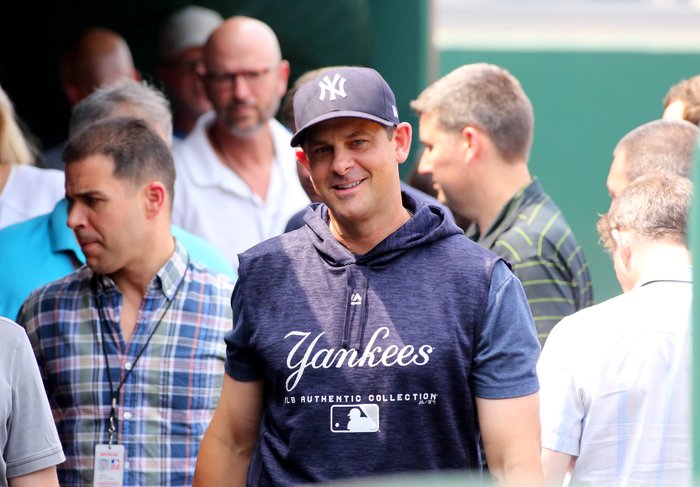
When Bret Boone reached the majors, the Boones became baseball’s first three-generation family. Bret played 14 seasons, made three All-Star teams and won four Gold Gloves at second base; Aaron played 12 seasons, made one All-Star team and has managed the Yankees for nine seasons, with a 790-565 record, according to Yahoo Sports. A third son, Matt, played in the minors. At the 2003 All-Star Game, Ray, Bob, Bret and Aaron were together on the field, the first family with all three generations at the game, according to Yahoo Sports. Bret’s son Jake was drafted by the Nationals in 2017, per Yahoo Sports, and now works in the Mets’ front office, per ESPN.
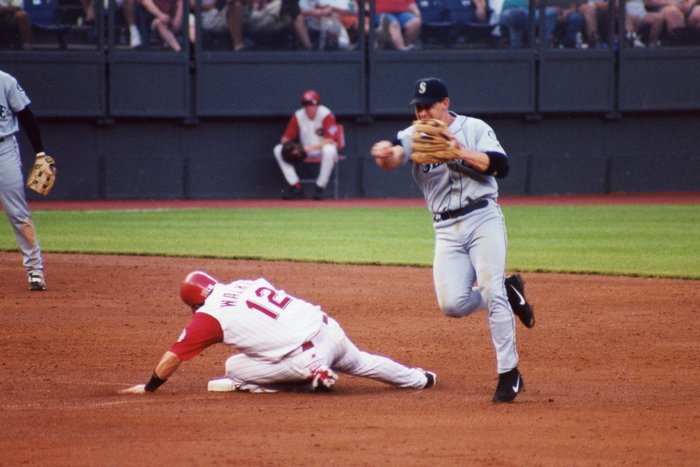
Bob Boone played it down. “My pride or feelings about my family didn’t change because Bret got to the Major Leagues to make us the first three-generation family,” he told the Kansas City Star, according to MLB.com. “The big part for my dad or me is our time is over — and you want to see your kids succeed.”
Quick facts
- Name: Robert Raymond Boone
- Born: Nov. 19, 1947, San Diego
- Died: Nov. 9, 2026, at 78; no cause reported
- College: Stanford, psychology degree; Stanford Athletics Hall of Fame, per Wikipedia
- Drafted: Phillies, sixth round, 1969
- Played: Phillies 1972–81, Angels 1982–88, Royals 1989–90; 1980 World Series champion
- Honors: four-time All-Star, seven Gold Gloves, Phillies Wall of Fame (2005)
- Managed: Royals 1995–97, Reds 2001–03 (371-444)
- Front office: Nationals, 2005–21
- Survivors: his wife, Sue; sons Aaron, Bret and Matt; and grandchildren, according to the Inquirer
The last headline
Bob Boone died on Monday, Nov. 9, 2026, at 78. Bret Boone posted the news on Facebook on Tuesday morning: “He was a man of great integrity. He was a great dad, husband, and patriarch.” And: “Baseball lost a great one today.” No cause of death was given, and none of the reports said where he died.
The Phillies called him “an incredible player, teammate and family man.” Mike Schmidt called him a teammate “for over a decade and a friend for 50 years.” Greg Luzinski, his former roommate, wrote: “We were like brothers.” Larry Bowa called him “a quiet leader, both on and off the field” and “the backbone of our team.” The Royals remembered “our first Gold Glove winning catcher.” The Yankees called him “an exceptional player, respected manager and distinguished executive.” Mike Piazza said Boone’s “mastery of catching” was what inspired him to play the position, according to Yahoo Sports.
He caught the last pitch of the Phillies’ first championship and the last pitch of Sutton’s 300th, set the record for games caught, and then watched his sons make the Boone name a three-generation story. He died at 78.
Sources
- Yahoo Sports, “Bob Boone, four-time MLB All-Star and father to Yankees manager Aaron Boone, dies at 78”
- Yahoo Sports (Los Angeles Times), “Bob Boone, longtime Angels catcher and part of a three-generation family of All-Stars, dies at 78”
- ESPN, “World Series champ Bob Boone, part of MLB’s first 3-generation family, dies at 78”
- Philadelphia Inquirer, “Bob Boone, catcher for the 1980 world champion Phillies, dies at 78”
- CBS Philadelphia, “Bob Boone, former Philadelphia Phillies catcher and 1980 World Series champion, dies at 78”
- ABC7 Los Angeles, “Bob Boone, World Series champion, former Angels catcher and part of 3-generation baseball family, dies at 78”
- WHIO (AP), “Former MLB catcher, manager Bob Boone dies at 78”
- MLB.com, “Bob Boone, Baseball Lifer” (Phillies Alumni, 2023)
- MLB.com, “Boone recalls catching Sutton’s 300th win” (2021)
- Wikipedia, “Bob Boone”
- SABR BioProject, Bob Boone (name, dates only; no biography assigned)