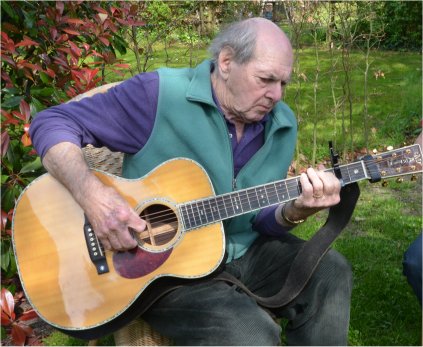
Bill Clifton was born William August Marburg, the son of a well-off Maryland family, and the stage name he kept for life came partly because his family objected to his music. He died Oct. 30, 2026, at 95, at his home in western Virginia. In between he collected old songs, published one of the most influential songbooks in bluegrass, organized a one-day concert in 1961 that later bluegrass festivals trace themselves to, and lived in England for fifteen years as an ambassador for American string-band music. In 2008 the International Bluegrass Music Association inducted him into its Bluegrass Music Hall of Fame.
A farm boy with a stage name
Clifton was born April 5, 1931, in Riderwood, Maryland, north of Baltimore. His obituary says he grew up on a farm outside Baltimore and found country and old-time music through radio broadcasts and worn 78-rpm records; Bluegrass Today adds that workers on the family farm introduced him to string-band music. At the University of Virginia he found other students who shared the taste, among them Paul Clayton and Dave Sadler, and helped form the Dixie Mountain Boys. The Wilkes Heritage Museum biography says he adopted the name Bill Clifton because his family objected to his musical activities. Bluegrass Today adds that it was often said the change partly spared the family from seeing the Marburg name attached to hillbilly music.
A. P. Carter and the songbook
The strongest influence on him was A. P. Carter of the Carter Family, whom Clifton met while still in college. His obituary says he admired not just the music Carter gathered but the reason behind it, and quotes Clifton: “A. P. Carter loved the music, and he wanted to make sure that the music lived on.” After graduating in 1954 he joined the Marine Corps and went to officer training, stationed at Camp Lejeune, North Carolina, where he compiled 150 Old Time Folk and Gospel Songs in his spare hours. It appeared in 1955 with a foreword by Carter, and Bluegrass Today calls it “quite influential.”
Luray, 1961
After leaving the Marines in 1956, Clifton began recording in earnest, much of it released on Starday, often with guests such as Jimmy Martin, Ralph Stanley and Mike Seeger. Then, on July 4, 1961, he put on an all-day concert at Oak Leaf Park in Luray, Virginia. The bill, as Bluegrass Today lists it, included:
- Bill Monroe
- The Stanley Brothers
- The Country Gentlemen
- Red Allen and Frank Wakefield
- Mac Wiseman
It was one day, not a weekend. Bluegrass Today notes that Carlton Haney’s first three-day festival, at Fincastle, Virginia, came later and “largely followed Clifton’s lead.” Wikipedia, the Wilkes Heritage Museum and Clifton’s own obituary all describe Luray as one of the first bluegrass festivals in the United States, which is the careful way to say it: among the first, not the only first.
Fifteen years abroad
Clifton’s obituary says that, having traveled internationally from a young age, he saw that he could bring bluegrass to audiences the musicians he admired never got the chance to reach. The road from there, stop by stop, as the sources give it:
- 1963: moves with his family to England and plays folk clubs and venues across Europe (Bluegrass Today adds Japan and Africa).
- 1963: hired as one of the organizers of the Newport Folk Festival, according to the Wilkes biography; his obituary credits him with organizational and promotional work there in its early years.
- 1967: joins the Peace Corps and serves three years in the Philippines.
- 1970: records an album in Auckland with New Zealand’s Hamilton County Bluegrass Band.
- 1970s: records for County Records and forms the First Generation with mandolinist Red Rector and banjoist Don Stover.
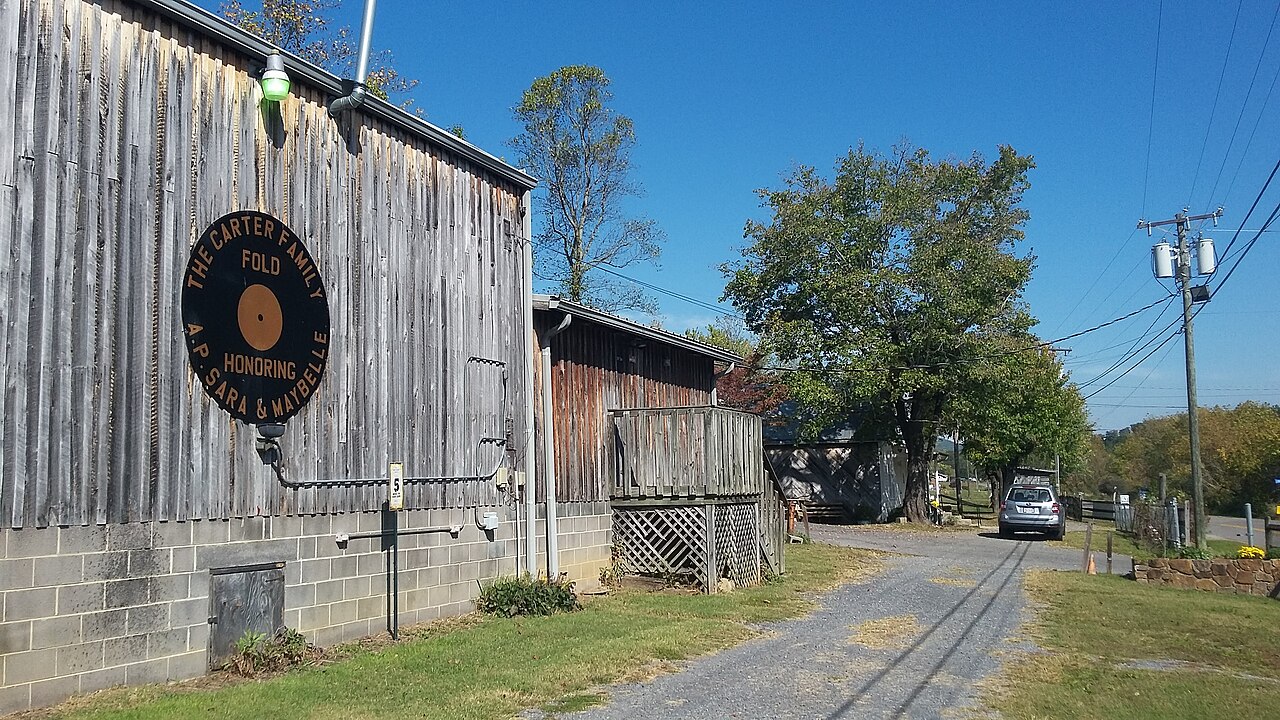
- 1978: returns to the United States and settles in western Virginia, near the Carter Family’s home ground, per Bluegrass Today.
Bluegrass Today says he became the face of American bluegrass for many UK fans in the 1960s and ’70s. Back in Virginia he later released much of his music on a label he founded, Elf Records. By the same account he made more than two dozen albums and wrote songs including “My Nights Are So Lonely,” “Lonely Heart Blues” and “When Autumn Leaves Begin to Fall.” The Wilkes biography calls his recording of “Little Whitewashed Chimney” one of several singles that became bluegrass standards.
Hear him
The last years
Bluegrass Today reports that Clifton died in his sleep at home and that he had not performed much in his last twenty years, though he was a familiar, gracious presence at concerts and at the World of Bluegrass convention. Following his wishes, the family is holding a private service. He was married twice and had ten children. He is survived by 18 grandchildren and 8 great-grandchildren, along with his sister and his children, according to the Farris Funeral Service obituary.
The family asks that memorial gifts go to the Carter Family Memorial Music Center. The obituary closes with a request that sounds like his whole career: to “listen to an old song, learn it by heart, and pass it on.”
Sources
- Bluegrass Today, “Bill Clifton passes” (Nov. 2, 2026)
- Farris Funeral Service, obituary of William August Marburg
- Wilkes Heritage Museum, Hall of Fame, “Bill Clifton”
- BluegrassBios.com, “Clifton, Bill”
- Nunn Center, Bluegrass Music Hall of Fame and Museum oral history, “Bill Clifton Interview”
- Wikipedia, “Bill Clifton”